When a university changes the names of a couple of its course programmes, you might reasonably assume it to be a terminological tweak. But words matter: a name-change could signal something bigger, something more fundamental.
That seems to have been the case when American University of Sharjah’s College of Architecture, Art and Design (CAAD) announced that two of its undergraduate programmes were changing their names. The BSc in Multimedia Design would become BSc in Film and New Media Design; the BSc in Visual Communication would be renamed BSc in Graphic Design.
At first glance, a cosmetic change or at best an administrative update. Beneath the surface, the decision seems to represent something more profound.
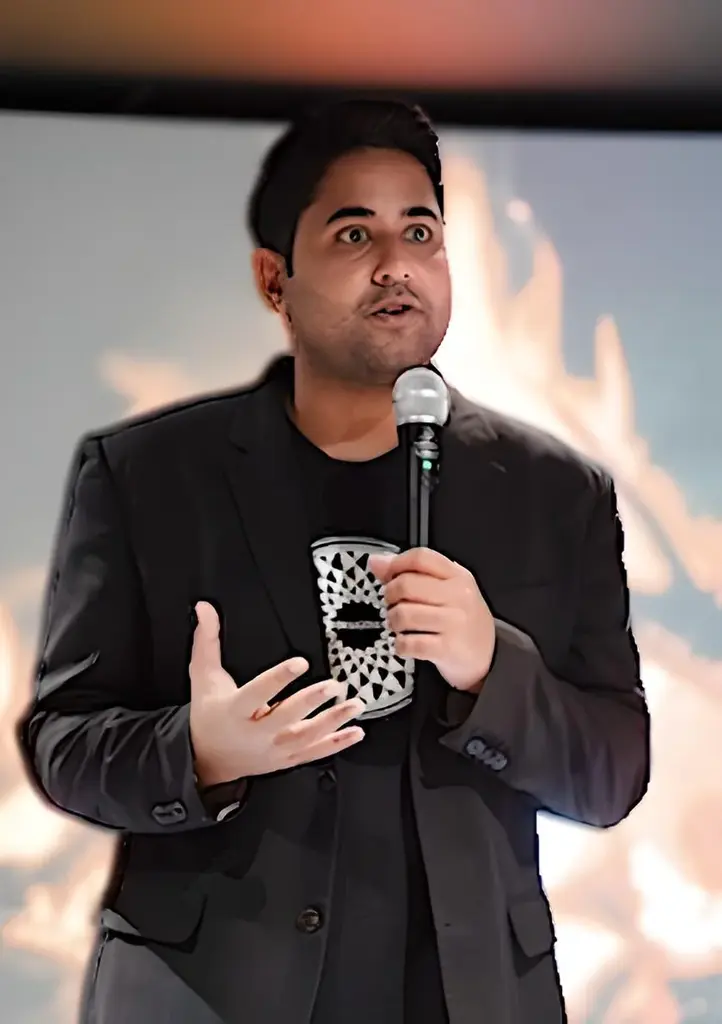
“It started as a departmental conversation about alignment between the English and Arabic names,” says Assistant Professor Mohammed Mamdouh (right), who played a role in the process. The Arabic term for ‘multimedia design’ didn’t quite capture what his students were actually learning and creating; and over on the other course, opting for ‘graphic design’ facilitates translation across English and Arabic – “which resonated better with the bilingual design community here,” says Assistant Professor Hala Al-Ani.
“The term ‘Graphic Design’ may seem very specific when compared to ‘Visual Communication’, but it’s actually more inclusive of what we do. It includes design thinking, identity creation, and storytelling across print, digital, and motion. It gives our students and graduates a clear professional identity while honouring the full creative spectrum of design.”
“Also, over time, the curriculum has evolved organically to include new technologies like AI, immersive media, and other emerging tools that are transforming the creative process,” says Mamdouh. “It was time for the name to reflect that.”
So what began as a simple linguistic adjustment became a deeper conceptual exercise: what to call two different degree programmes that are being reshaped, in real time, by a new generation of artists and designers as well as AI and other emerging technologies?
Film, media and the new creative frontier
Mamdouh, whose professional background spans film, media, and brand strategy (his CV includes roles as Director of Brand at OSN and StarzPlay) helped steer the process from both creative and conceptual perspectives. “We wanted to make sure our programmes accurately communicated who we are, what we do, and where we’re going,” he says. “It’s about clarity, credibility, and giving our students a title that carries weight, both in the region and internationally.
“The language matters. It shapes how students imagine their careers, how they present themselves, and how they connect to a global creative community, and especially employers. It’s a tool for future-building.”
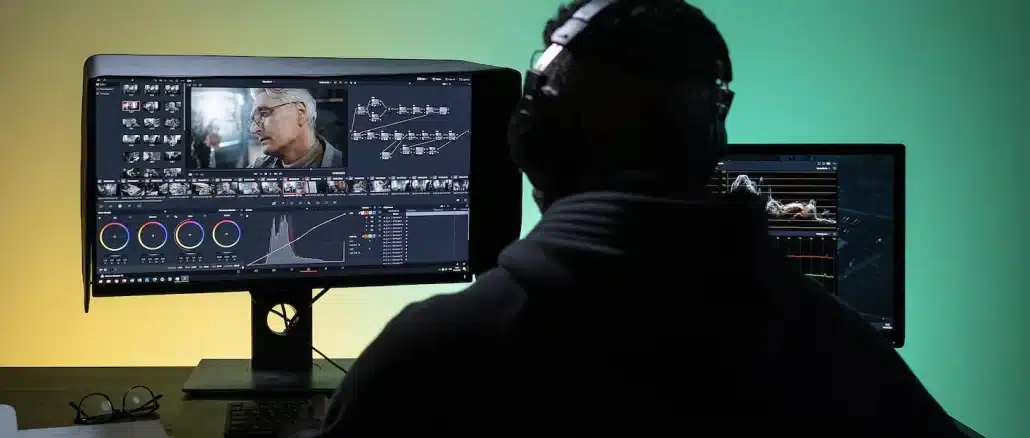
For Mamdouh, the Film and New Media Design programme name more accurately describes the skills students graduating from the course learn. The current programme now covers everything from cinematic craft, interactive storytelling and animation to immersive environments and AI-generated narratives.
The Fall 2025 semester also marked a milestone for students and faculty at CAAD: it is the first time in the history of the college that an entire cohort of students has produced AI-generated short films. Just two years ago, Mamdouh notes, the idea of using AI in creative production would have been controversial, even taboo: “some might even have called it unethical”. Today, it’s integral to the learning process.
“Film and new media are not just art forms,” he says. “They are dynamic forces of innovation that resonate across culture and industry. By empowering our students to use AI tools and immersive technologies in truly creative ways, our students are becoming technically proficient in tools that will form a big part in their professional futures, but also learning how to translate complex human ideas and experiences into impactful stories and designs.”
Graphic design beyond logos and labels
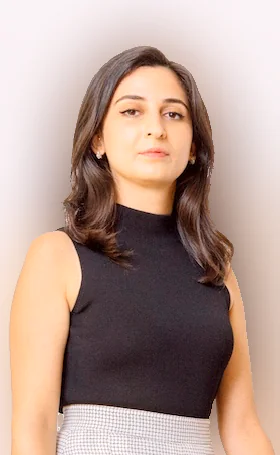
Hala Al-Ani (left) co-leads the Graphic Design programme at AUS and is also a partner in Mobius Design Studio. For her, the shift from ‘Visual Communication’ to ‘Graphic Design’ was not about narrowing the focus so much as reclaiming graphic design as being more than just a medium for commerce, a mechanism for simply producing logos, posters, and campaigns for profit.
She argues that design can also be seen as a force for reflection and change, a discipline capable of shaping how societies see themselves and their values. “Design has the potential to do more,” she says. “It’s up to us to show that.”
At the heart of both programmes is the philosophy that art and design education is about more than mastering tools – it’s about developing ways of thinking.
“While it’s essential to stay up to date with the latest technologies, we remind students that software is a means, not an end,” says Mamdouh. “Because technology evolves so fast, our job is to cultivate adaptability, artistic and design sensitivity, and critical thinking, skills that transcend any single platform.”
Al-Ani echoes the sentiment. “Tools will always change. What matters more is the curiosity and discipline students bring to their learning. We emphasise creative exploration and independent thinking, qualities that last longer than any software update.”
She notes that many CAAD students are already active as content creators, artists, and designers before coming to CAAD, but that this has pros and cons. “Our role is to help students understand the difference between visibility versus substance,” she says. “We want them to build a practice rooted in intention, not just getting likes or quick reactions. Although the attention economy rewards instant gratification, we teach our students how to think deeper and go beyond formulaic formats.”
Both recognise that a sense of place, of regional and historical context, is important. “You can’t begin to design without first engaging with what’s around you,” says Al-Ani. “In the Gulf, where multilingualism and cultural hybridity are part of daily life, our students already operate across languages and identities. Educational institutions shouldn’t just acknowledge this. They should actively encourage it.”
Equally, both feel that their courses should help students to find and hone their own voice. Here’s Mamdouh’s approach: “From early in the programme, students are challenged to ask: What story can I tell that no one else can? How can my visual language reflect where I’m from, without falling into cliché?”
A new generation
That can be a tricky balancing act. Mamdouh recognises the pitfalls: “rather than prescribing a regional aesthetic,” he says, we guide them to discover tone, rhythm, and symbolism that feel authentic to their context or the story they are trying to tell.”
It’s an approach that’s producing results, with several students having recently won international film awards for works created during their time at CAAD. “We’re seeing work that feels grounded here,” says Mamdouh. “Not derivative, not imitative but distinctly of this place.”
In the end, the renaming of CAAD’s programmes is symbolic of something larger: a recognition that the language we use to describe art and design must be as dynamic as the discipline it serves.
“These changes are about preparing our students to become the creative leaders of tomorrow,” says Mamdouh. “It’s important that people understand that technology isn’t replacing creativity. It’s expanding it.”
For Al-Ani, the evolution is also about reclaiming graphic design’s cultural agency. “Design has the power to influence how we see ourselves and our societies,” she says. “We have a responsibility to push the discourse forward, not just to teach marketable skills, but also to nurture students’ artistic vision.”
And art, film and design should not be limited by definitions that aim to paint them as one thing or another, but understood as living disciplines that thrive in the spaces between: between art and technology, global and local, tradition and innovation.
So while a name change may appear small, it’s a reminder that language holds power. What began for the faculty as a simple terminological exercise ended up prompting a rethinking of what it means to deliver an art and design education.
Maybe there’s a lesson here for anyone considering a rebrand or a rename – you may end up reshaping the very ground you stand on. And that could be a very good thing.
Be the first to comment