
One of the characteristics of Shakespeare’s plays, especially the tragedies, is the way their themes so easily cross boundaries of time and place. They can speak to us, even though the words as written are delivered by people we don’t know in specific circumstances and specific places that are both foreign to us: the pain of betrayal, the headlong rush of love, the machinations of the self-interested, the sneakiness of the coward – we can all relate to them …
And Shakespeare’s situations can also be resited and given a more modern setting to add meaning to the here and now. They all work: civil war, internecine politics, Trumpian self-aggrandisement and self-interest.
So the plays really can have something to say to a modern audience. Despite the popular successes of based-on-the-bard enterprises like West Side Story or The Lion King, Shakespeare can be intimidating, boring or simply unknown. A great play with compressible contemporary relevance can help restore the balance, but in any case a good performance is good whatever the source.
All of which is by way of an introduction to Lara Foot’s much acclaimed version of Othello, which arrives at the Arts Center at NYUAD this weekend – complete with that elegant blank verse, the signature insights into the human heart, the romance and jealousy, treachery and murder.
That might be enough for some directors: Lara Foot brought a different view.
Other adaptations of Othello have riffed on the notion of the outsider (and a victim of racism) who will always be looked down on by the likes of Brabantio and the Duke. Lara Foot’s adaptation takes it beyond the individual to speak specifically to the violence of genocidal colonialisation.
A South African theatre director, playwright, and producer who has been the CEO and Artistic Director of Cape Town’s Baxter Theatre Centre since 2010, Foot has adapted the original to give it a specifically African perspective – setting it in 1880s Namibia (which at the time was called German Southwest Africa) and inviting the audiences to see the legacies of the brutal violence of colonisation. To make the point she has staged the play in several languages, isiXhosa and Afrikaans as well as English; and Shakespeare’s Duke has become Otto von Bismarck, discussing with his officers how to slice up Africa.
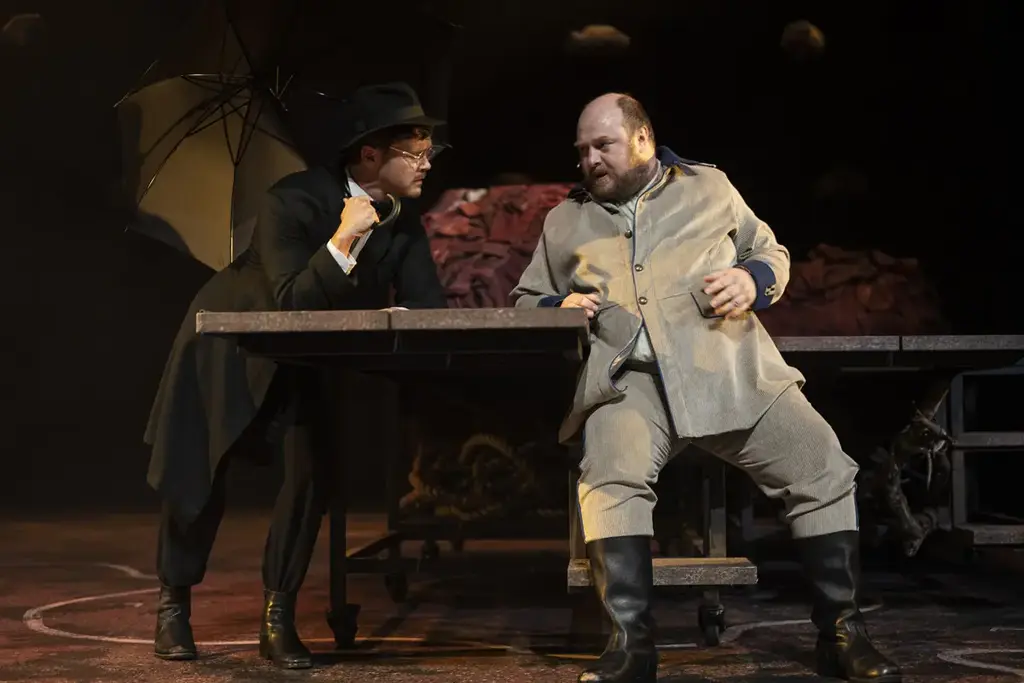
There’s much to think about here. It’s been argued, for instance, that this play highlights the role of theatre as a political instrument, specifically one that challenges colonial violence; and further, that it “seeks to not only disrupt the centrality of Shakespeare and western literature in contemporary spaces but also to resist Eurocentric readings of the colonial past”.
Maybe that’s pushing things a bit too far, or maybe the Cape Town audience would tap into the deeper hurt. Certainly when the original production made its debut in Düsseldorf two years ago, the reviews homed in on “Shakespeare’s timeless knowledge of human nature” as well as “a clever feeling for the present”; in Africa, maybe the present is more closely informed by the past.
This feels like an unmissable insight into contemporary southern Africa, the colonial experience generally, and maybe Shakespeare too. It probably wouldn’t work without a strong production team – costumes and the very clever set design by Gerhard Marx, music by Kyle Shepherd, lighting by Patrick Curtis, and a cast led by Atandwa Kani as Othello with Albert Pretorius (Iago) and Carla Smith (Desdemona).
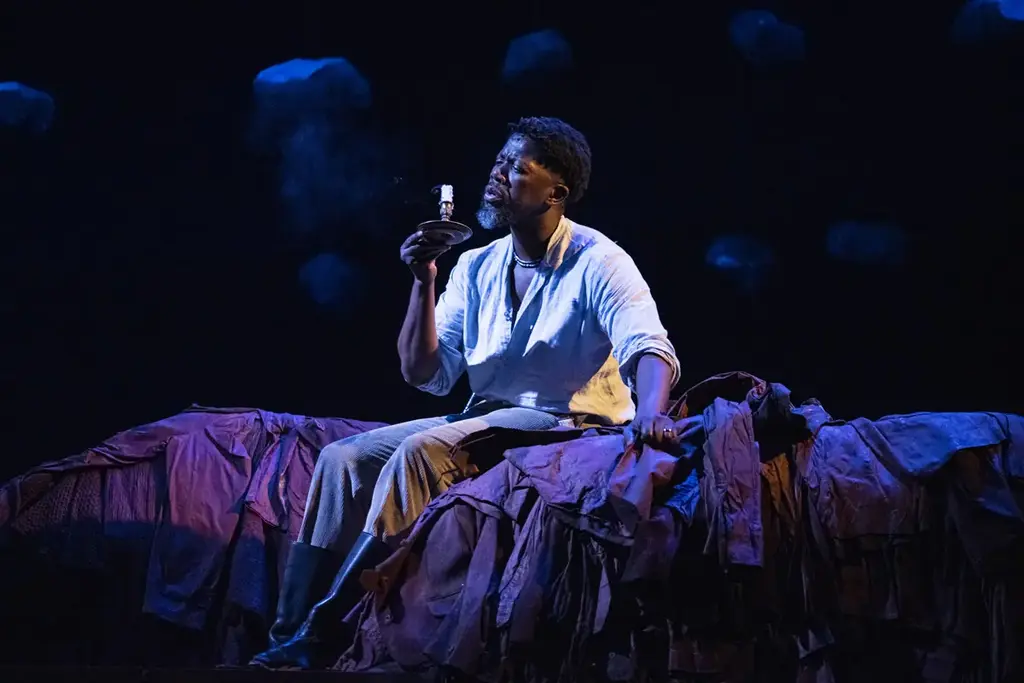
Shakespeare’s Othello plays in The Red Theater at The Arts Center, NYUAD, on 9 and 10 October at 7.30pm; tickets are AED 105. The performance on 9 October will be followed by a Q&A with Lara Foot and the creative team, moderated by Shamoon Zamir, NYUAD Professor of Literature and Art History. More information here.
Be the first to comment