
The inaugural RIBA Middle East Awards were handed out during Dubai Design Week. The qualifications are pretty generous – submissions had to have been completed between July 2020 and July 2024 by a qualified architect (not necessarily an RIBA architect) – and the aim is of course to recognise the best of the region’s new architecture (and to highlight the architects responsible).
But RIBA President Chris Williamson also identified the near-obligatory Higher Purpose, saying the projects recognised in the RIBA Middle East Awards “show architecture’s growing influence in shaping how people live, learn, and come together across the region” and “celebrate progress, not only in design and technology, but in how buildings can create opportunity, inclusivity, and lasting cultural value”.
The awarded projects do seem to be united by a sensitivity to context – heritage, landscape, culture – which is exactly what you’d expect from successful architecture, especially in this region. With some of the winners, the context is key – the Buhais Geology Park Centre couldn’t have been a concrete slab dumped into the desert, the new STEM centre for Dubai College needed to fit into its physical surroundings and reflect the evolving education it will help deliver, the Serai Wing gets its class and atmosphere from sensitive modernisation of existing buildings that carry a tradition of their own.
Kerem Cengiz, the Jury Chair for the awards, made this point well: “The winning projects reflect an architectural language that is deeply rooted in the Middle East’s evolving identity, one defined by stewardship of heritage, climate consciousness, and social transformation. Each shows how architecture can mediate between tradition and progress: preserving memory while embracing innovation.”
Certainly the award categories have been chosen to reflect a broad range of projects and therefore architectural impacts. Good architecture often costs good money, and many such awards are limited to the biggest and boldest of statements for clients with the deepest of pockets. The RIBA Middle East Awards include some of those, but many of the nine winners are smaller, quieter projects with perhaps a more subtle impact …
Design for Living Winner
Al Wasl Plaza, Dubai
Adrian Smith + Gordon Gill Architecture
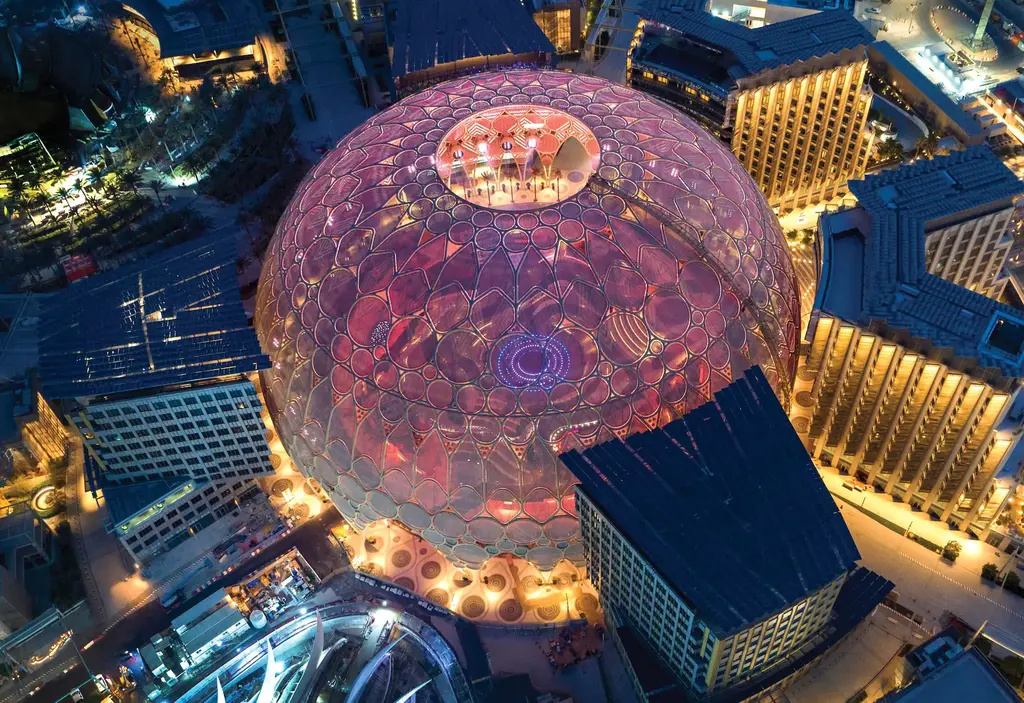
Not that subtlety is an absolute requirement. Al Wasl Plaza, the centrepiece of Expo 2020 Dubai, is an exuberant, extravagant (in the best sense of the word) space that has evolved into a busy, vibrant centre for Expo City. Its iconic dome is the big plus, of course; Guinness World Records agrees it’s the world’s largest immersive dome, a trellis structure that provides shade during the day and transforms into a 360o projection surface at night. The Plaza hosts year-round events – shows, performances, musical productions and more, including the current Dhai Dubai light art installations. It’s striking and fun, it’s as sustainable as it could be (a high recycled content and minimised carbon emissions during construction), and it will last.
Future Project Winner
King Salman Park, Riyadh
Gerber Architekten i+ Buro Happold / Setec
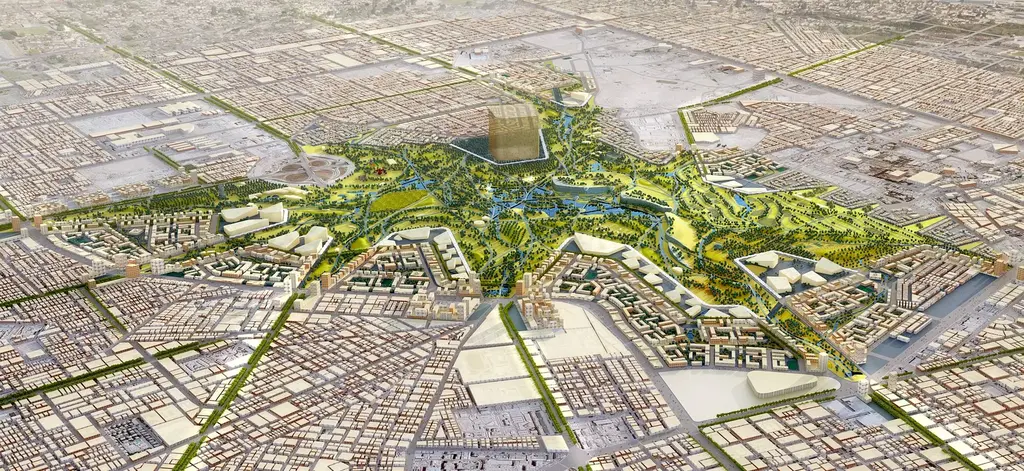
And you wouldn’t expect anything less from a project in Riyadh – the repurposing of a former airport as the world’s largest urban park (more than 13km2). Its landscaping will include theatres, art galleries, and sports facilities, meeting the community-service requirement – indeed, it’s described as ”a vital green intervention to the heart of Riyadh … designed to enhance biodiversity, improve air quality, and promote active, healthy living”. That ticks lots of boxes. It will of course need a lot of water – 150,000m3 per day – but apparently this will come from treated wastewater, especially TSE (treated sewage effluent), so there’s a hopefully sustainable and climate-resilient element to all that greenery …
Adaptive Reuse Winner
The Serai Wing, Bait Khalid Bin Ibrahim, Sharjah
ANARCHITECT
But it’s the smaller projects, the ones that perhaps won’t get so much public footfall and eyeball, that really caught our attention. ANARCHITECT has transformed a pair of 1950s pearl-merchant homes into a boutique hotel for Chedi al Bait that echoes Shariah’s past and offers contemporary comfort – especially by retaining and restoring the original character of the building (spiral staircases, original stonework etc) while introducing new spaces and contemporary elements (travertine, perforated metal, a commendably minimalistic aesthetic). As adaptive projects go, it isn’t the most outlandish repurposing you will find – but it has been done with sensitivity and taste. Wouldn’t you want to stay there?
Sustainability & Resilience Winner
Jafar Centre, Dubai College
Godwin Austen Johnson
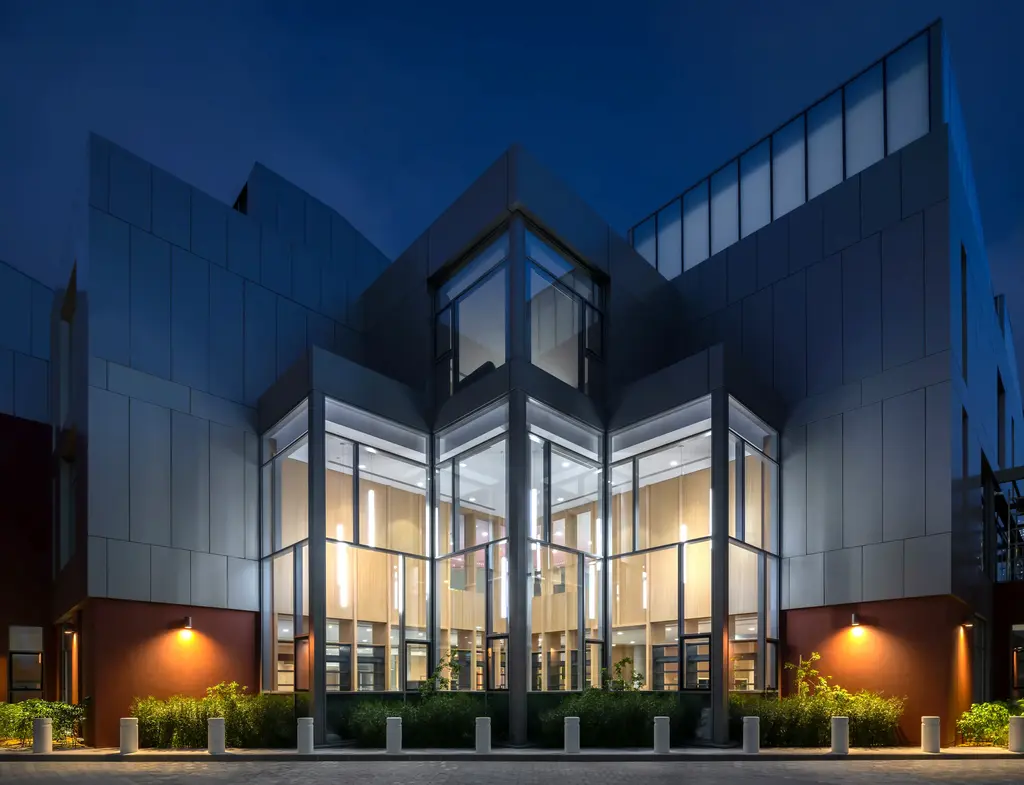
Another discreet development, and one that has already collected a clutch of awards including Social Infrastructure Project of the Year (MEED 2023) and a Design Middle East Award for education in the same year. The Jafar Centre is a purpose-built STEM facility that replaced underused space in Al Sufouh; GAJ designed a compact vertical building which prioritises daylight, acoustics, thermal comfort, and sustainability – indeed, it’s aiming for LEED Gold certification. Perhaps equally important, it was delivered with minimal disruption to the surrounding area and the life of the school. And while the exterior is elegant enough, it’s the interior design that grabs the attention – lots of emphasis on flexibility and collaboration, for instance with moveable walls between classrooms; an indoor garden sits in the central atrium with several different areas surrounding it, including pods for socialising or study and an open plan library.
RIBA Member Winner
Buhais Geology Park Interpretive Centre, Sharjah
Hopkins Architects
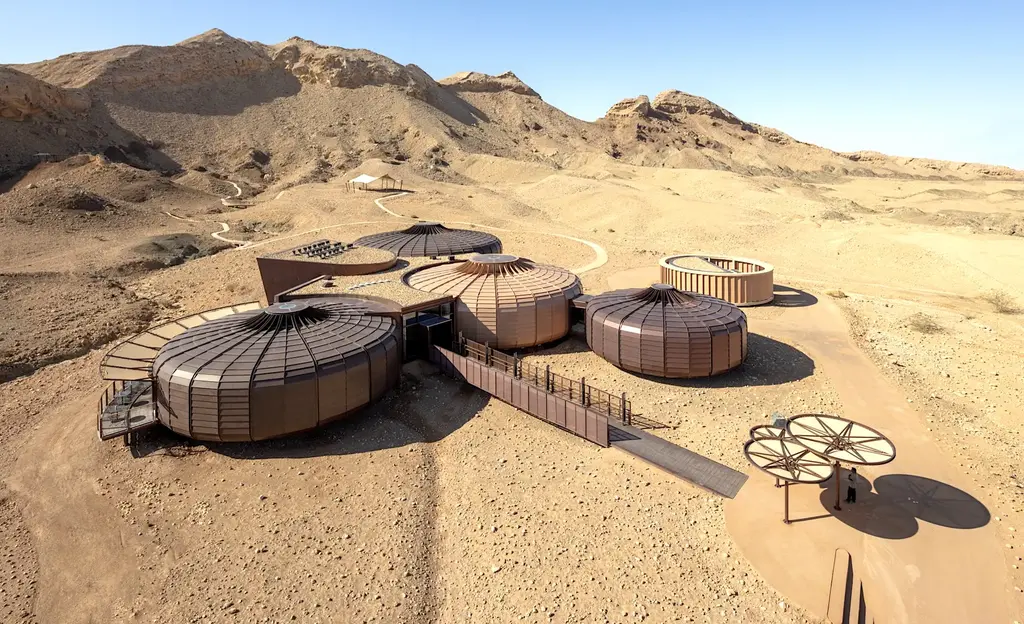
Set within a protected desert landscape, the educational centre for Buhais Geology Park features a group of striking, shell-like buildings inspired by fossilised sea urchins found on site. That’s the kind of starting point you’d expect, but there’s no preference for form over function here – the centre really works. Hopkins Architects designed five interconnected pods of varying sizes for exhibition areas, a theatre, and a café and gift shop; looping around the site is an outdoor trail with viewing areas, an outdoor classroom shaded by a canopy, and raised walkways across natural rock formations and ancient burial sites. It all looks great, even slightly prehistoric (that’s sea urchins for you), and it does blend gently into the surrounding terrain; there’s a strong sense that visitors are well served with information and eduction about the fragile desert environment from the architecture as well as the content. It’s been up and running since 2020, so it only just snuck into the eligibility window …
RIBA Member Winner
Expo 2020 Thematic Districts, Dubai
Hopkins Architects
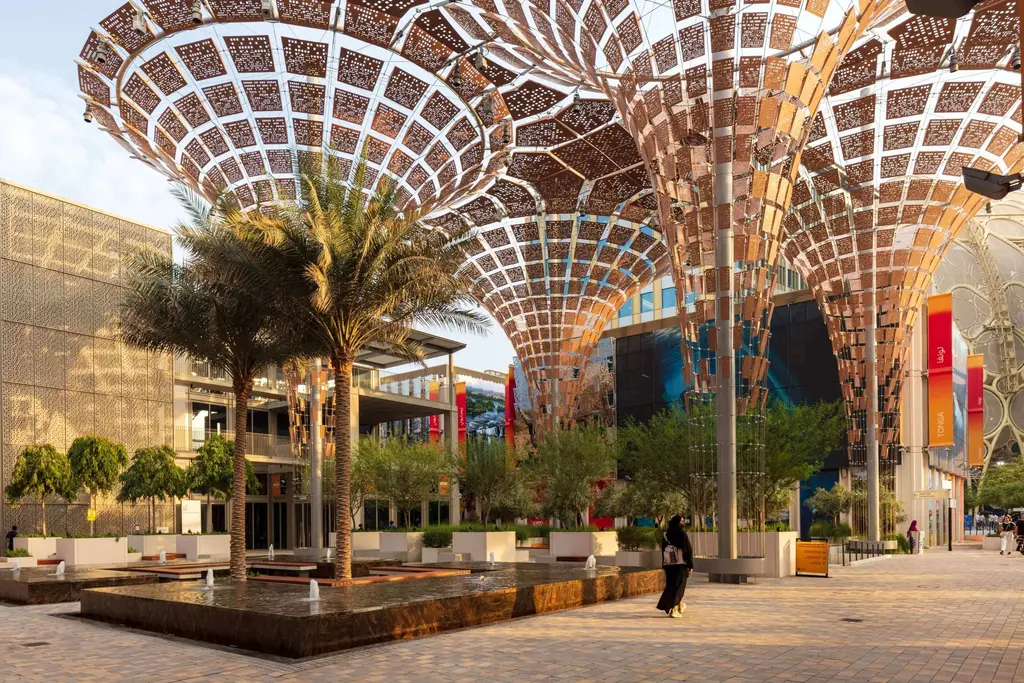
A complete contrast (in scale at least) from Hopkins Architects – a district masterplan for Expo City, creating a human-scaled, walkable environment inspired by traditional Arab urbanism as a modern interpretation of the oasis, with shaded courtyards, tree-lined streets, and adaptive reuse at its core. The challenge was to design something which would meet the highly functional, temporary needs of exhibitors, but would also adapt easily to deliver a lasting legacy project. That seems to have been achieved: the project has been successful at serving both the initial function of Expo 2020 and the area’s evolution into a coherent mixed-use urban space.
Social Architecture Winner
Al-Mujadilah Center and Mosque for Women, Doha
Diller Scofidio + Renfro
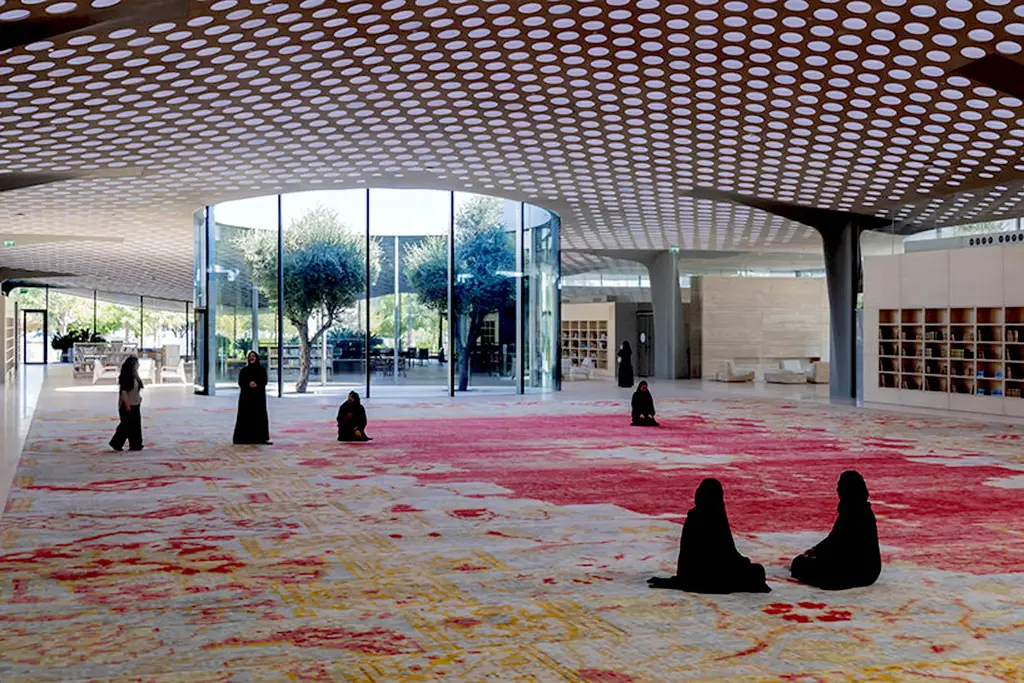
Conceived by HH Sheikha Moza bint Nasser and designed by one of the hottest architecture studios around, the world’s first purpose-built contemporary women’s mosque features a grand 875m2 prayer hall designed for up to 750 worshippers, plus classrooms and other side-spaces under a spectacular undulating roof with 5,500 small conical light wells. It’s the soft wash of natural light from those that really makes the building so special; there’s no direct sunlight. Structurally, the large steel span eliminates the need for interior columns, creating an open, uninterrupted space where visitors can see olive trees and feel a connection to the surrounding landscape. Elizabeth Diller said it’s a place for education and work: “ringing those together under one roof, with classes and discourse and debate, was very important, because there was really no space for that to happen. It’s a paradigm-shifting thing …”
Temporary Architecture Winner 1
Singapore Pavilion, Expo 2020, Dubai
WOHA
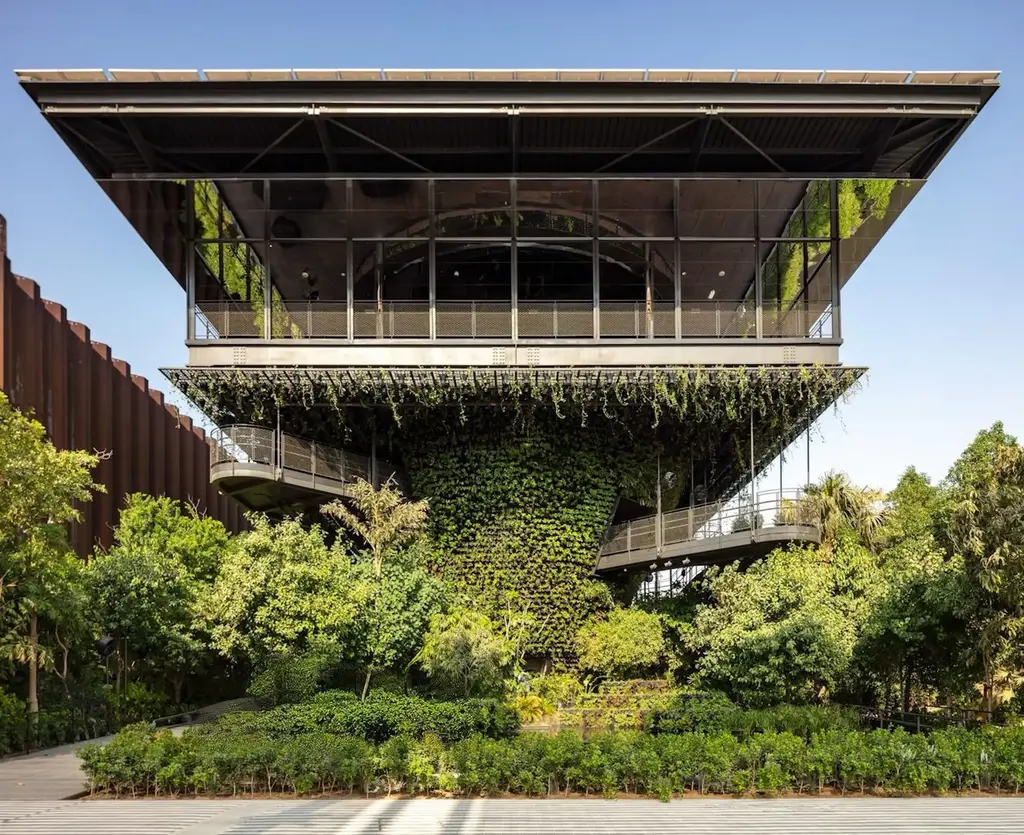
Singapore’s Pavilion was genuinely one of the best at Expo 2020 – a lush oasis of vertical gardens, achieving net-zero energy and water use with recyclable materials and techniques that showcased the country’s innovation in sustainability and biodiversity. It works both in architectural terms and as a good fit for the client’s brief.
Temporary Architecture Winner 2
World Food Waste Teahouse (Arabi-an), Dubai
Mitsubishi Jisho Design
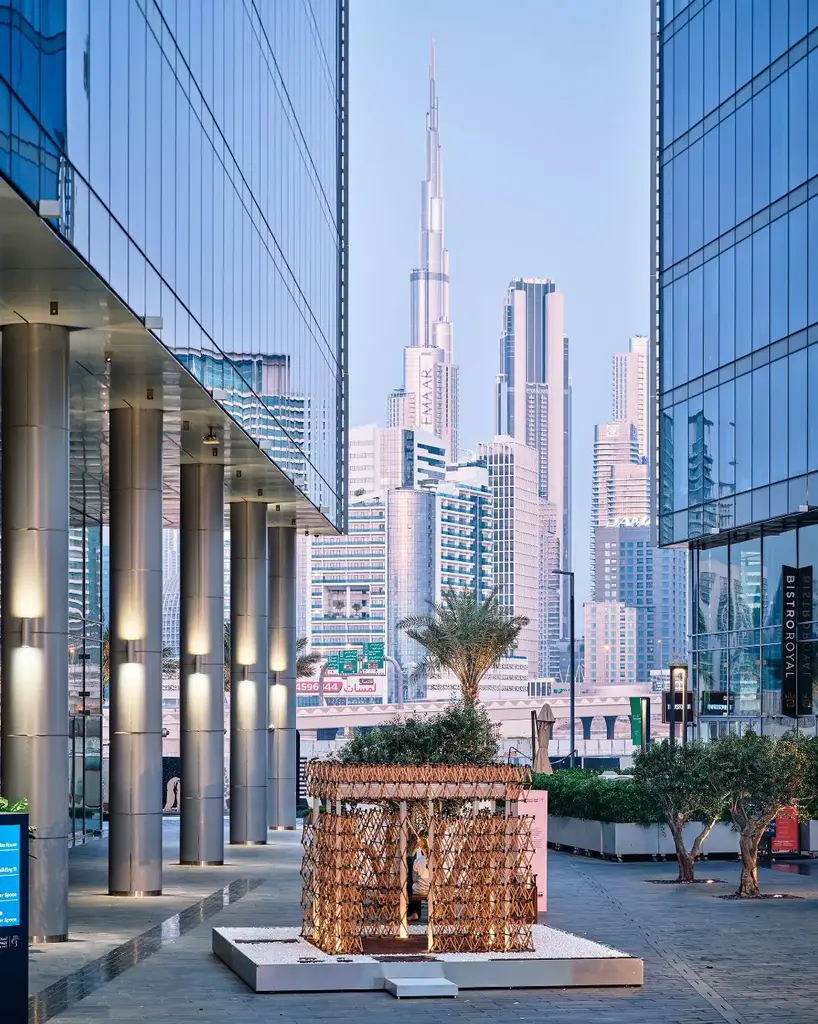
This one is probably the most self-consciously innovative of the winners and in an aesthetic sense the least designed, using tea leaves, dried fruit and recycled paper to create “the world’s first food concrete structure”. Fully biodegradable and climate-adaptive, the pavilion (one of two built by Mitsubishi Jisho in 2023 – the other was in Venice) can be disassembled into parts for further upcycling, and then reassembled and redistributed as furniture that can be shaped in various ways: “circular design in a culturally meaningful context” as the press release put it.
The RIBA Middle East Award jury members
Be the first to comment