
A series of conversations about the use of AI in Hollywood started in 2023, informal but high-powered. They were organised by Susan Ruskin, dean of the American Film Institute, and top producer Kathleen Kennedy (whose CV includes dozens of major films including ET, Back to the Future, Jurassic Park, Schindler’s List, and The Sixth Sense; as president of Lucasfilm from 2012 to January 2026, she oversaw the modern Star Wars era).
These discussions have been strictly private, and the participants have largely retained their anonymity; but they included Janice Min and Richard Rushfield from The Ankler, both regarded as influential independent observers of Hollywood, and The Ankler received permission to publish the first document that resulted from the conversations.
That discussion paper is titled Human Generative Workflows, and it obviously represents common ground as a starting point for discussions: the group argues that “while much of the public conversation has focused on artificial intelligence itself, we believe the more important story is how an entire creative industry comes together to shape its future”.
Essentially the document aims to move Hollywood away from a binary ‘AI or no AI’ debate. Its primary goal is to establish a common vocabulary that distinguishes between different types of AI usage based on the level of human creative control and the resulting copyright status.
To that end, AI usage is characterised as three distinct forms:
- Utility techniques and embedded AI: standard, utility-driven tools already common in software like Premiere or DaVinci Resolve for functions like denoising, upscaling, and rotoscoping. These are considered copyrightable because they solve technical problems rather than make creative interpretations.
- Human generative workflows: artist-controlled pipelines where generative models are integrated into professional tools (like Nuke or Unreal). In HGW, humans provide the direction, fine-tune custom models on their own original IP, and iterate granularly. Because the artist maintains precision and control, these outputs are viewed as human-authored and copyrightable.
- Machine-generative: refers to purely prompt-based content (voices, performances, or stories) that substitutes for human work. The document argues that because the machine determines the specific expressive elements (and not the human) these outputs are probably not copyrightable.
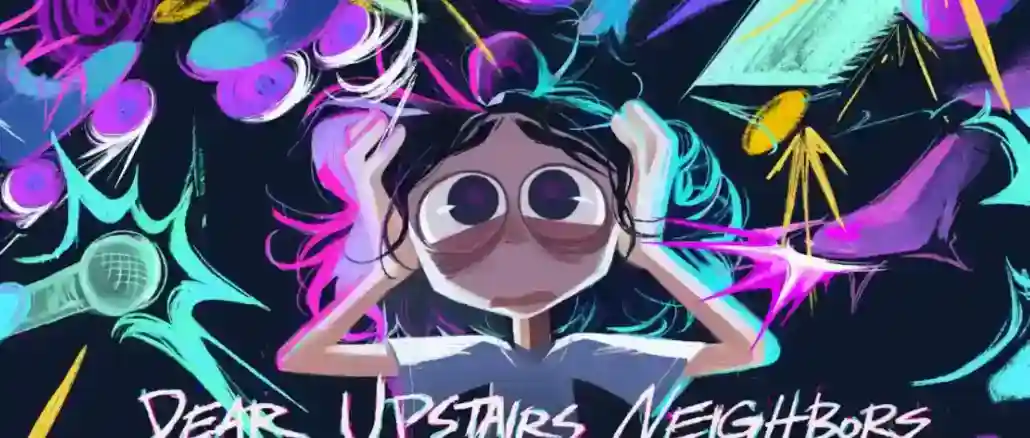
As an example, the document uses Connie He’s animated short Dear Upstairs Neighbors, which premiered at Sundance in January. The film used generative models (via Google DeepMind’s Imagen) but every frame was the result of human-led decisions, custom training on original art, and constant iteration.
The HGW framework document argues that adopting this classification system could help in negotiating contracts and credits. By focusing on ‘how’ and ‘who’ usage rather than whether AI was used at all, the proponents hope to prevent the wholesale loss of creative control and legal ownership of intellectual property in the age of generative AI.
Given that generative tools are becoming an inevitable part of production, this seems a sensible approach and logical enough. The problem, of course, is that it’s not the filmmakers who will decide this; it might not even be the studios; and it may already be beyond the ability of governments to legislate on IP ownership in this area (and, given the overwhelming pressure from the tech bros for an AI free-for-all, in many others). It may be that America’s knee-jerk recourse to the courts will provide a degree of clarity one way or the other, but there’s a long way to go before that happens.
Be the first to comment