

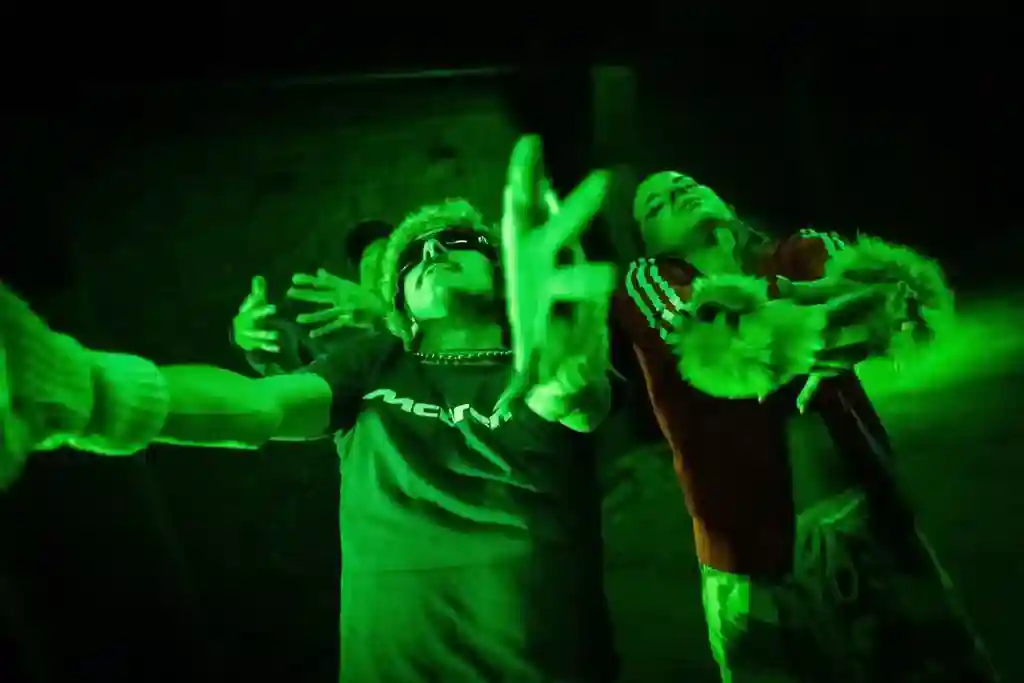
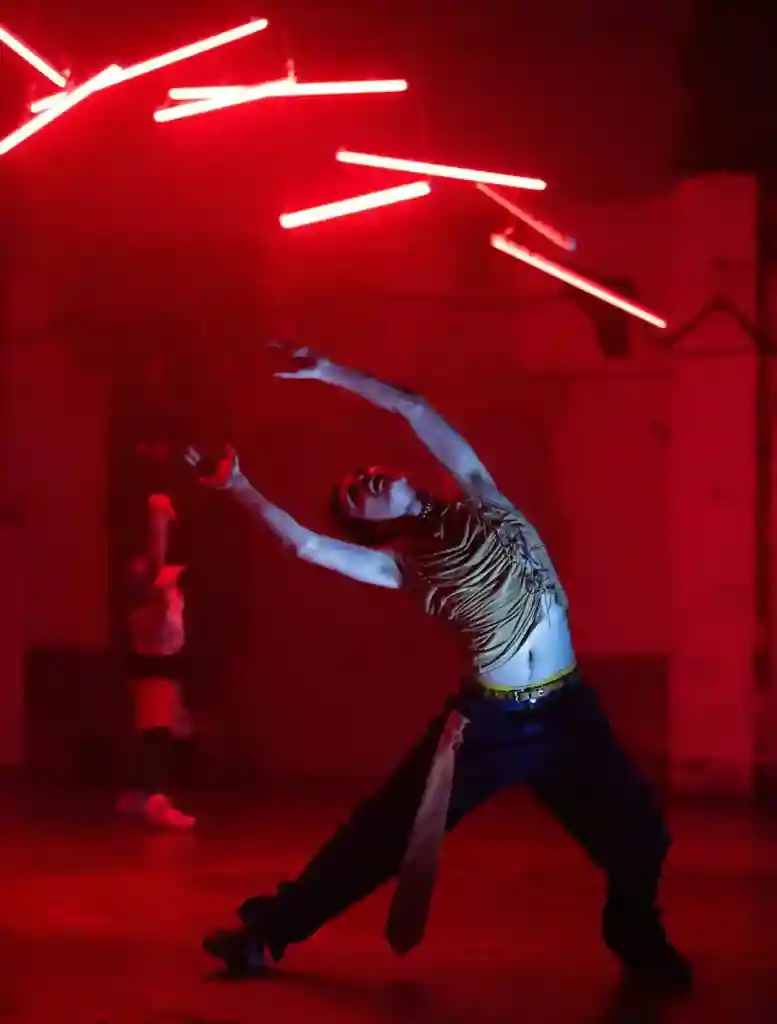
Dance doesn’t get any more immediate than this: all the atmosphere of a three-day rave complete with pounding Detroit techno courtesy of Suburban Knight’s bass-heavy spine-freezing 1993 album Nocturbulous Behavior, compressed it into one relentless, electrifying, exhausting hour. It’s a paean to stamina and sweat, to freedom and release, to striving and need …
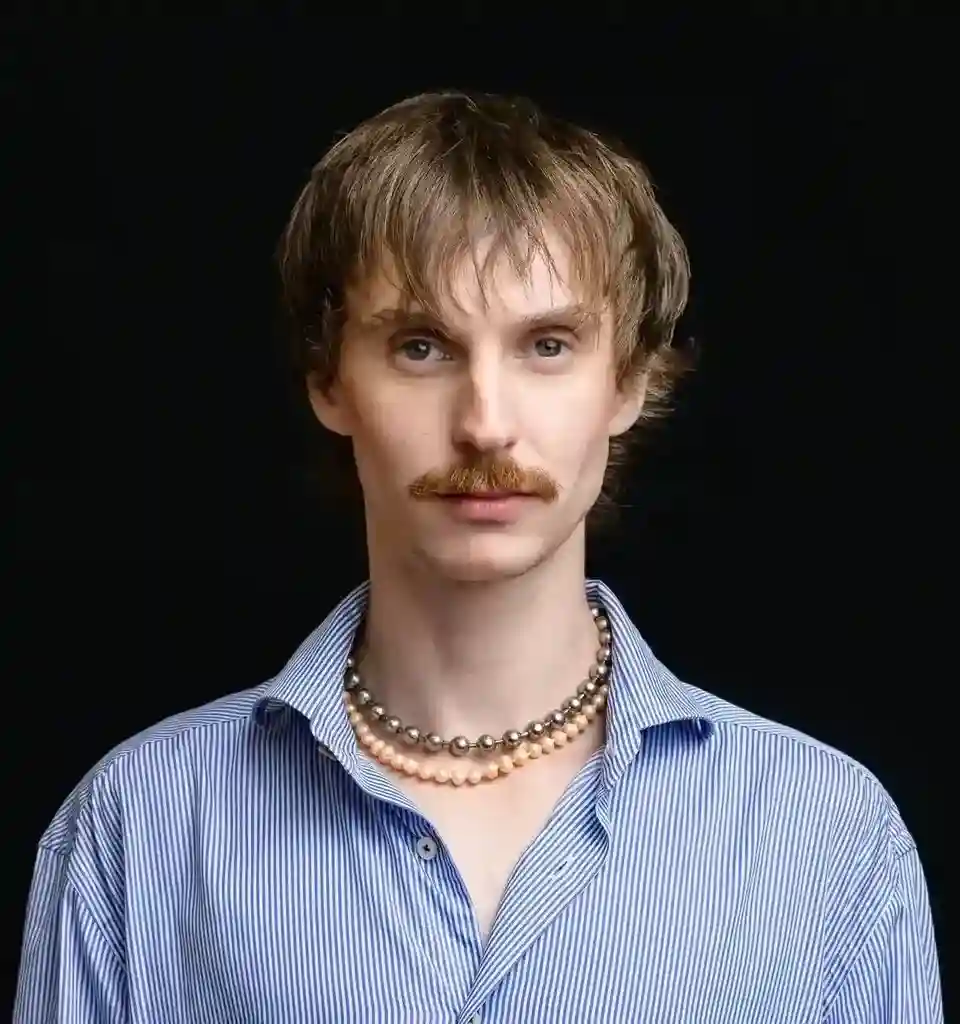
The Butterfly Who Flew Into the Rave was created by the New Zealand choreographer Oli Mathiesen (right) with Lucy Lynch and Sharvon Mortimer, all three of whom will be dancing the piece at The Arts Center this week (Thursday to Saturday). “Each dancer brings their own flair, robotic precision, balletic lines, club-floor abandon,” said one reviewer. “But together they’re magnetic, like the untouchably cool group at the party you wish you could join.”
Somehow the idea of choreographed rave seems tautological, taking that freedom and flexibility and improvisation and shoehorning it into an organised, rehearsed, goal-directed performance with audience separated from performers.
So we asked Oli Mathiesen about that.
“I really love the kind of beautiful tension of trying to choreograph a form that is essentially improvised, that doesn’t have any rules. How do you codify something that is inherently opposed to being codified? That tension is really fascinating to me.
“The task was not how to replicate the dance floor on a stage: it was how to harness the energy of the rave, the apparent chaos of the movement, imitating that sensation when you’re on the dance floor yourself and the bass is throbbing in your head and the strobe is going crazy and you’re seeing flickers and glimpses of your friends around you. That was the mission: how to turn that into choreographed movement.”
Club-techno dance isn’t usually about being seen, either, yet a performance like this one has an audience. It needs one, says Oli Mathiesen, because that’s the kind of choreography he does. “I know some people in the artistic world feel the art should be able stand alone, and anything else is pandering to your audience. But for me, the audience is a vital collaborator: they witnesses it. And especially with a work like this, even though it’s highly choreographed, we feed off their reaction.
“I guess the measure of a successful performance is just making the audience feel something – and I really want to make the audience feels something in a very rich way, to impact them deeply on emotional bandwidth.
“Some people get really moved by the music, some feel a real affinity and appreciation for choreography, some really appreciate the physicality – the exhaustion and the endurance. I’m never looking to guide the audience into a particular sensation, just one that is felt deeply.”
Oli has been dancing most of his life – “from about age 8” – and studied contemporary dance at Unitec in Auckland. He chose it because “the programme there was very focused on training you both as a dancer and as a choreographer. Specifically because I wanted to sharpen my skills in choreography.”
And what’s the dance scene like in New Zealand? “It’s rich and vibrant. We have some incredible companies, a lot of contemporary indigenous work too. Though we are feeling pressure from funding cuts and the lack of resources – especially difficult because we’re so isolated in New Zealand. And sometimes we feel left out of the global conversation, which maybe hinders some of the kind of progression of the art form. But it also means that to some extent we are able to make dance without reflecting what’s happening elsewhere.
“There is definitely a specific kind of New Zealand Aotearoa style, which we share with Australia as well. It’s very interesting when we get to take our work overseas, seeing how it sits in relation to other companies and other practices of dance.”
It must be empowering to know that you’re part of a bigger community that you might not have tapped into before? “Exactly, yeah.”
The bigger community also includes audiences with a different frame of reference. “We’re always curious about how Butterfly is going to sit in different contexts. When we first took it outside the country we were a bit concerned that everyone would be a lot more advanced and making cooler stuff than us and blah, blah, blah. But it’s been really fascinating to see how there is still a really kind of distinct flavour to the work, a character of its own.
“And I think the other thing that has surprised us is the way this work transcends generations. When we made it in Auckland we really thought it would appeal to a younger audience. But it turns out it also works for older audiences. For them maybe it’s nostalgic, a return to the joy of rave. But younger audiences without the direct experience can see the darker undertones of the work – the entropy, the existential crisis that you see the dancers going through, the commentary on the pursuit of more.”
He’s interesting on the genesis of The Butterfly Who Flew Into the Rave. “It was a response to Covid. I’m always interested in trying to make work accessible to audiences, and that can be really hard with contemporary dance. But here we had a shared experience: even if you didn’t get Covid, you went through the lockdowns and restrictions. So I wanted to make something which reflected that grit and rigour we had been through.
“Around that time, you could really sense that there was this itching for the permission to go back out to social spaces. I think we’ve seen this in other places, especially in the music industry, with artists kind of riding the wave of a desire to go back out and commune again, and to let loose. I wanted to tap into that too.”
But Butterfly is also suffused with the need to carry on through the exhaustion, to succeed, to be victor as well as victim. It’s explicit in the event. “Last year we did 23 days in a row at the Edinburgh Fringe. Extremely challenging, probably the hardest thing that any of us in the team had done in our artistic careers. The show is just bonkers in terms of physicality – like running a half marathon every day for four weeks. I don’t recommend it to anyone …”
A review of another Oli Mathiesen work described the piece as boisterous, loud, and truly maximalist. Would that describe his style generally? “Yeah, right now I love vibrancy and work that spills out beyond the proscenium arch. And I do love working with camp and parody as choreographic tools.” Camp? “Some people don’t see Butterfly as camp, but look at it: it’s just such a ridiculous task to do, it’s about excess – or maybe asking what is the point of the excess.
“But this is definitely not the full extent of my practice. After this year I’m definitely looking to explore different themes and different ways of choreographing.”
There’s one more vibrant piece to come, though, and it sounds loaded with camp and parody. “It’s a new work premiering in October at the Tempo Dance Festival in Auckland called YMCĀ, which is YMCA with a Māori tohutō over the A. It’s an indigenous queer retelling of the Village People, looking at the kind of performed identities that we do on stage, the kind of staged queerness and the tokenising of our indigenous selves for Western audiences …” (and for good measure the programme notes add “appropriation has never looked so good”).
“I guess this kind of marks a shift into some more kind of abstract storytelling on my part. But what does remain similar is me always wanting to build a very kind of cohesive, aesthetically rich world, something that has a really clear visual identity.”
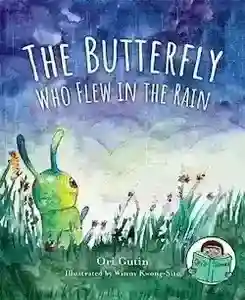
Last question: why the title? Surely there’s some metaphorical meaning to the butterfly? Yeah right. “During a Covid lockdown I heard a radio discussion about a newly published kid’s book. It was called The Butterfly Who Flew Into The Rave. ‘That’s sounds neat,’ I thought. Butterflies finding rave culture, just like the kids.
“Turned out I had completely misheard the title – actually it was The Butterfly Who Flew Into the Rain. It was about confidence, about being brave and stepping out into unfriendly environments … I became fascinated with that mishearing, so I jotted it down in my long list of potential show names.
“Now lots of people ask me, who is the butterfly? Like, what’s the metaphor? But the work was made separate to the title. It’s just that the themes do overlap. So I just leave it to the audience to find where the title sits in relation to themselves.”
The Butterfly Who Flew Into the Rave is at The Arts Center’s Black Box theatre at 7.30pm on Thursday – Saturday, 10-12 September. The ticket price of AED 105 includes a “techno after-party” for an hour or so after the performance. Details here; and move quickly – tickets for all three shows are going fast.
Be the first to comment