
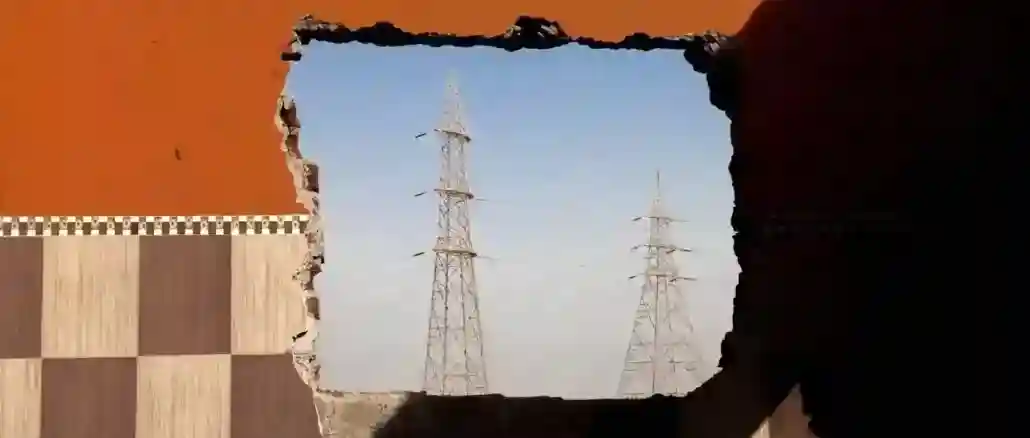
The theme and participants for the third Sharjah Architectural Triennial (14 November 2026 to 14 April 2027) have been published, and they both look a meaty counterpoint to the more usual design/technology-led architectural get-together.
That theme for SAT03 is ‘Architecture Otherwise: Building Civic Infrastructure for Collective Futures’. The aim is to examine how architecture can help shape collective life in a world marked by rapid urban transformation, which arguably is second only to climate adaptation as the key issue for social architecture today (and yes, the two are obviously interconnected).
SAT’s explicit mission is about reframing architectural discourse in West Asia, South Asia, and the African continent, areas where the massive development of cities has led to the urban environment becoming (as the bumf puts it) “the primary terrain where social, economic, political, technological and ecological forces collide, fundamentally reshaping how we live, connect and build together”. Crucially, cities have outgrown their physical boundaries – the ‘urban environment’ now means vast territorial and cultural differences, digital realms and migratory flows that have global consequences. “In this context, architecture must reclaim its role as a critical and imaginative force capable of responding to the nuances and complexities of how we inhabit the world today.”
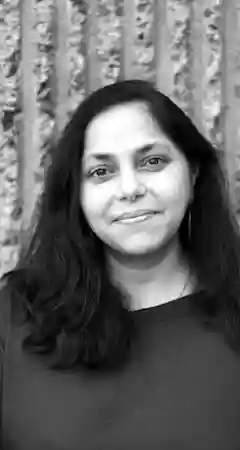
The theme comes from SAT03’s chief curator, Vyjayanthi Rao (right). She’s a Visiting Professor at the Yale School of Architecture and a Co-Editor in Chief of the journal Public Culture; Rao describes herself as “an anthropologist, writer and curator focusing on displacement, memory, material cultures and imaginaries of the future in contemporary social life”. Her approach has been forged by research into the hectic spatial transformation of Mumbai, notably in a project titled ‘Speculative City: Architecture and the Arts of Dwelling in Global Mumbai’ which proposes “a new method for understanding contemporary cities from the standpoint of the global south” where “mutating conditions themselves become enabling frameworks for making propositions in the absence of far reaching visions and redemptive teleologies.”
So she wants this edition of the Architecture Triennial to see architecture through the lens of anthropology – “grounded in the locality of phenomena and context and remaining attentive simultaneously to global conditions and cultural difference,” as she puts it. “We are especially interested in exploring migratory movement and the rapid extension and localisation of urbanism as building blocks of contemporary social life. [SAT03] will foreground propositions for buildingcivicinfrastructurehospitable to these flows, creating new pathways for collective life to prosper in an uncertain and rapidly mutating world.”
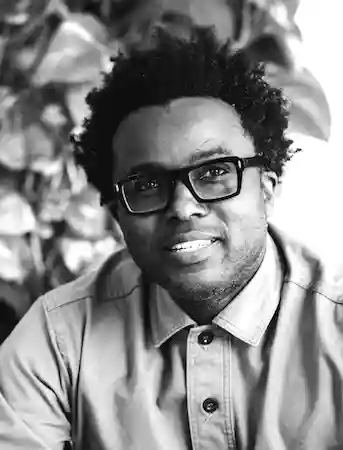
Her associate curator, Tau Tavengwa (left), is clearly a kindred spirit. The editor and co-publisher of Cityscapes Magazine (“a multidisciplinary publication and platform exploring the realities, contradictions, and possibilities of urbanisation across the Global South”) he has been largely responsible for the complementary CS Studio, a research-led consultancy that develops experimental methods to reframe cities around three questions: How do cities actually work? How do people actually live? And how might we live together differently, in the near and distant future? All of those are clearly relevant to SAT03.
This all sounds very exciting, provided it doesn’t get too formulaic or too worthy. Obviously the remit doesn’t cover the kind of architecture that focuses on individual buildings or the minutiae of materials; still less is it an architecture of the technological future – though such tools might have something to contribute to an understanding the how, why and where of cities (and people) in the global south. Instead Architecture Otherwise aims to brings together architects and designers with , artists, scholars, cultural institutions and local communities from across the Gulf and the Global South.
Maybe there will indeed be some critical conversations about the future of architecture and civic life. Certainly the curators’ intention is that SAT03’s participants will generate a new understanding of architecture as a practice grounded in collective life, “demonstrating how civic infrastructures are continually produced through acts of care, imagination, movement, learning and solidarity”.
There will be site-specific installations, films, archives, exhibitions, performances, workshops and lectures. And for the first time, some participants will also have month-long residencies in Sharjah “allowing them to embed their work within its cultural and social context”.
Some 32 participants have been listed, with practices ranging across architecture, urbanism and design to anthropology, education, art, and community initiatives.
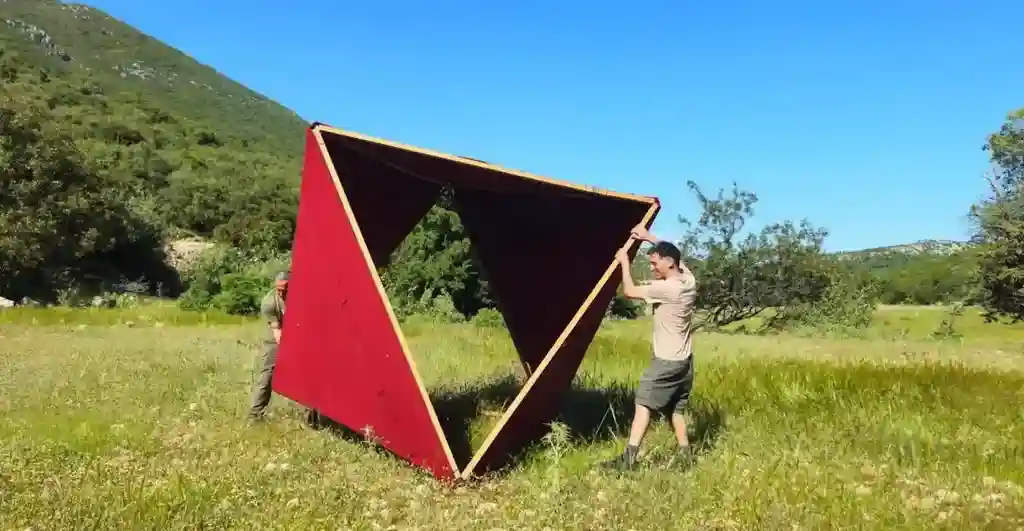
Several projects investigate what it means to build under conditions of movement, uncertainty and transience: Hiba Bou Akar, Mohamad Hafeda and Nathalie Harb examine how histories of displacement in Lebanon can be carried within mobile, shelter-like installations that incorporate materials from refugee settlements and wartime infrastructures. Aslıhan Demirtaş, Ali Cindoruk and Dilşad Aladağ from Turkey are bringing Tumblespace, a moveable and adaptable structure for temporary community that is informed by traditions of nomadism. ABARI’s Weaving Spaces is a monumental bamboo structure that can be dismantled and which will move across several locations in Nepal, hosting workshops to celebrate the country’s woven bamboo tradition.
At the other end of the scale a number participants will be looking at the impacts of large-scale infrastructural development. A couple of film projects are relevant here – Sa’dia Rehman covers her family’s displacement from Pakistan when the state constructed the Tarbela Dam; Kush Badhwar explores the ecological and social consequences of the Navi Mumbai International Airport development. And a major photographic archive by Rajesh Vora and the National Institute of Design revisit six decades of the Sabarmati River in India – once a valued site of water, seasonal rhythms and economic activity – and how recent urban redevelopment has transformed its relationship with the city.
In their focus on human experiences of the city, many projects highlight the importance of placing local communities at the centre of urban development – Megawra Built Environment Collective in collaboration with RIWAQ explore how heritage in historic cities is shaped through communities and migrant populations, rather than built form alone. POCAA champions co-creation as a model for planning and placemaking in Bangladesh. Delhi’s Social Design Collaborative will work with migrant communities in Sharjah on alternative urban futures.
Other projects focus on the social infrastructures that sustain the communities which emerge in cities. Another Empty House looks at Gulf Malayan ‘koottaymas’, self-organised networks of care and support. Karachi LaJamia creates a nomadic community reading room that shares histories of resistance, ecological knowledge and learning from Pakistan. Kishwar Rizvi documents the city of Karachi’s gymkhana social clubs as sites of memory, conservation and civic repair.
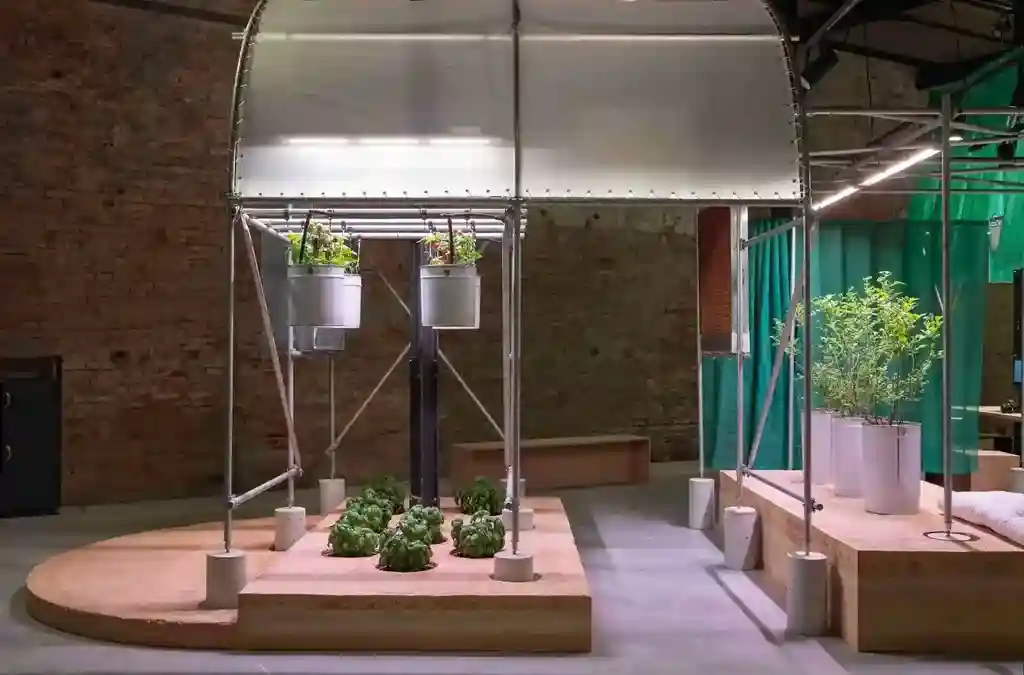
Then there are projects that imagine new civic futures through technology, education and creativity. Azza Aboualam is bringing Assemblies, a speculative greenhouse system exploring food production and self-sufficiency in arid environments that builds on her 2025 Venice Architecture Biennale project. Nashin Mahtani and Disaster Map Foundation have a film about PetaBencana – a real-time disaster-mapping platform for Indonesia – that considers how open-source software can function as a form of civic infrastructure for climate adaptation and collective resilience. Sri Lanka’s Let’s Build Great Things! will be working with children from diverse groups in Sharjah to construct a temporary public structure.
A number of participants are creating environments for contemplation and alternative ways of experiencing the city. For instance, Mohamad Nahleh and Ozayr Saloojee use storytelling, performance and guided walks to explore the imaginative possibility of ‘night architecture’ – “a counter to the imperialist urban skylines that dominate through discourses of enlightenment”. Other extensions of ‘architecture’ deal with storytelling and shared knowledge – so BARDStudio‘s Sharjah Glossary and Otherwise School develops an evolving vocabulary drawn from everyday lived experience in Sharjah, suggesting the rich complexity of urban life away from reductive administrative and economic categories.
As Rao commented: “Architecture Otherwise focuses on how cities are experienced, co-created, and transformed, positioning architecture as the medium through which everyday social and cultural practices shape collective life. Against the exceptionalism, extractive logics, and separations that characterise architecture as usual, the Triennial proposes other ways of imagining, inhabiting, and collectively producing the built environment”.
The full participant list:
The full curatorial statement by Vyjayanthi Rao and Tau Tavengwa is here. The third Sharjah Architecture Triennial runs from 14 November 2026 to 14 April 2027 at locations around Sharjah, with the opening programme on the first weekend. Details here.
Be the first to comment