
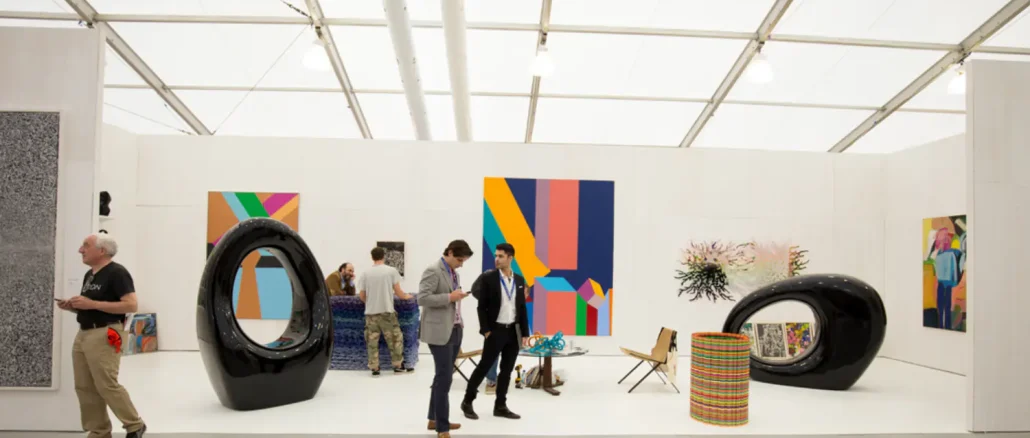
In 2025, global art sales hit $59.6 billion – and that’s up by 4 percent year-on-year. The modest increase follows two successive years of decline, though the 2025 total is still well short of the post-Covid 2022 peak of $70.4 billion.
So says the tenth annual Art Basel and UBS Global Art Market Report, produced by the doyen of arts economists Dr Clare McAndrew and her team. This is widely regarded as the most comprehensive and best-analysed source of information on sentiment and results from both dealer and auction sales, and as such it’s the best data-driven overview of the art business that’s currently available.
Our key takeaways:
Auctions up
A couple of days after the Art Basel/UBS report appeared, Artmarket.com published its own Artprice Global Art Market Report. This is a more restricted piece of work, focussing on auction results (Art Basel/UBS offers a more comprehensive cover that additionally includes sales through dealers and art fairs). Artprice says art auction turnover increased 12 percent to $11.1 billion in 2025; Art Basel/UBS counts many more sales in public auctions (a total of $20.7 billion) and put the increase at 9 percent.
The difference can be attributed to different methodologies, but does illustrate the ambitions and relative uses of the two reports – one is very specifically a deep dive into the auction business, the other a much broader survey of a much broader market.
But the two reports obviously share the same overall conclusion: auction market sales returned to growth in 2025, albeit in a slightly patchy fashion.
They also agree on a couple of significant trends – growing recognition for female artists and a shift from online back to in-person sales. Art Basel/UBS says all online sales (including dealers) fell to $9.2 billion, their lowest level since 2019; Artprice does highlight the growth in online auction platforms as a transformative force in the market.
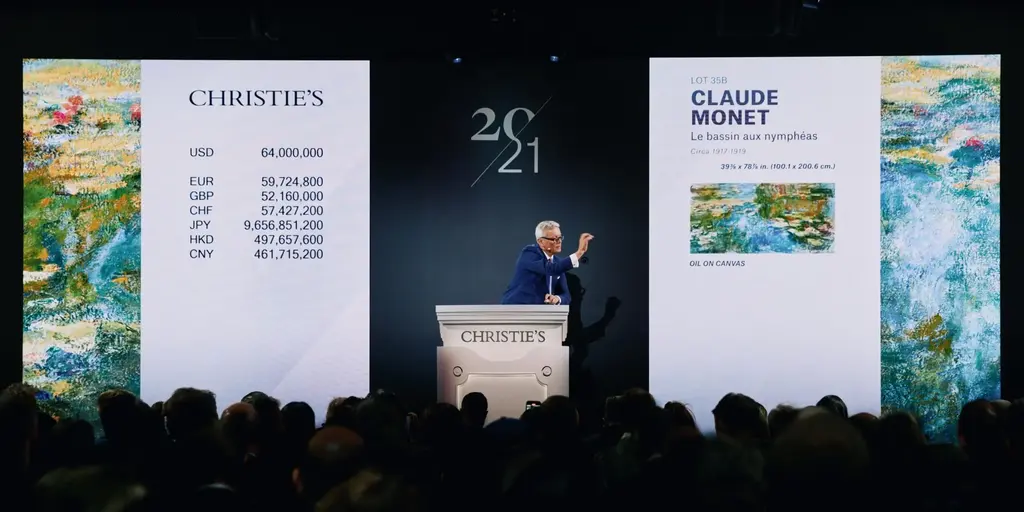
Certainly the big Q4 art auctions in London, Paris and New York delivered healthy sales – buyers seemed to be returning, the top end and the big names sold well, there seems to be less speculation to give what might be seen as an artificial boost to mid-level and emerging artists. Back to normality, in fact.
Artprice also put some figures on the volume of lower-value sales (“in 2025 more than 90 percent of global art auction results were under $10,000. Far from the image of a market reserved for millionaires, the art market is now functioning primarily as a volume market …”).
Deals through dealers
But the majority of art sales overall go through dealers – assuming we exclude direct sales from studios and by individual artists, which are (a) pretty difficult to count and (b) numerically numerous but insubstantial in terms of total bank deposits.
Art Basel/UBS says global sales in the dealer sector grew a modest 2 percent to hit $34.8 billion; the lower end of the market did best, with double-digit increases in average sales values for dealers turning over less than $500,000. The top-end dealers who turn over more than $10 million pa also grew – by 3 percent – after two years of decline.
Across all dealers, 42 percent reported an increase in sales (up 7 percent from 2024), 33 percent reported a decline, and the balance were unchanged.
Those figures make an interesting comparison with the dealer confidence stats: 43 percent expected sales to have improved by the end of 2026, and that’s 10 percent higher than the the previous year. Only 19 percent anticipated a decline in their sales, with the balance expecting no change.
The major challenges cited were the growing complexity of cross-border transactions and the unremitting cost pressures. Total operating costs for dealers rose by an estimated 5 percent on average, above the aggregate sales growth and above the general rate of inflation in most countries.
The topical issue of tariffs was also addressed; more than half of dealers (56 percent) reported that tariffs had a negative impact on their business (versus just one percent optimistically citing a positive effect).
Art fairs
We were interested to see that art fairs seem to have a promising future once again. There were 370 in 2025, a net gain of nine on the year before; and dealer sales though fairs increased to make up an average of 35 percent of their turnover, up 4 percent year-on-year and the highest level since 2022. (Predictably, participation costs remained one of the top-ranked challenges for dealers during the year.)
All sizes of dealerships saw an increase in the contribution of art fair sales to their total turnover, apart from the very largest – the range was from 27 percent for the smallest dealers to 36 percent for those in the £1m-$10m turnover range.
At the gallery
As for in-gallery shows, dealers reported holding eight exhibitions on average, up by one from 2024.
And again on average, dealers represented 32 artists each – that was up from 28 the year before. The number of artists represented varied by the size of the gallery, of course; smaller galleries represented fewer artists on average than larger ones in most years, but this time around it was the smaller businesses that reported the biggest increase in artist numbers was reported by the smallest businesses – for galleries turning over less than $250,000 per year, the total rose from 23 artists in 2024 to 30 in 2025.
Presumably the goal is to appeal to new and different collectors, or maybe there’s more of a willingness to promote relatively unknown artists. There has certainly been a greater willingness to feature female artists; Art Basel/UBS reports that for dealers working in both the primary and secondary markets, the share of female artists represented grew by 4 percent in 2025 to reach 45 percent of their total, the highest level to date.
Here comes the pachyderm
So – generally good news all round, though the improvement in sales is patchy and dealers in particular are wary of the impact on demand of political and economic volatility. Indeed, the Trump-sized elephant in the room for 23026 is of course the Israeli/US war with Iran; and, in particular, the middle-term economic fallout.
In theory, and however unpleasant the comparison with actual lives and livelihoods lost, this might be too bad for the art market: in times of instability, investors often seek physical assets like art, especially safe havens like fine art’ and the Old Masters. And high prices for oil and gas mean more spending money for some, especially institutional investors in producer countries.
Both reports are available for free download. The Art Basel and UBS Global Art Market Report 2026 is impressively comprehensive and well-edited (with commendably concise summaries at the head of each chapter) and a scattering of good essays on art-market issues like the need to operate in “a macro environment dominated by zero-sum trade policy and mercantilist economics”). Download it here.
And the Artprice Art Market Report provides an unrivalled deep dive into global auction results in 2025, analysing by various metrics and pulling together some solid conclusions. It’s available here.
Be the first to comment