
It’s part of the job of a new arts centre to create new traditions – regular, loyalty-building events that deliver something understandable and familiar while exemplifying what the organisation stands for.
In its 11 years of operation, NYUAD’s Arts Center has created a couple of these: lo-fi performance in Hekayah | The Story, The Arts Center’s annual riff on the many meanings of ‘home’ – scheduled close to the UAE’s National Day, with a curated selection of artists from diverse backgrounds bringing stories of our communities to life through the lens of their histories, heritages, and cultures.
And Thursday 29 January sees the latest edition of the other one, the Tamaas Festival – apparently quite different in that it programmes professional musicians from outside the UAE, actually not so dissimilar as a celebration of the swirl of geography and cultures.
Its origins lie in The Arts Center’s first season, which included performances from a number of artists you might associate with the term ‘world music’ – Les Ambassadeurs, which included Salif Keita and Amadou Bagayoko (from Amadou and Maryam); the Romanian brass band Fanfare Ciocărlia; the Nile Project, making music deriving from different cultures all along that river. Arts Center Artistic Director Bill Bragin recalls that someone mentioned this kind of music hadn’t been heard in Abu Dhabi since WOMAD on the Corniche in 2011. “That issue was actually very much in my mind,” he recalls. “WOMAD was a strong reference point. This kind of music was a very much a sweet spot for me too, because of my programming preferences overall and especially my work with globalFest [he is a co-founding director of the not-for-profit world music festival and service organisation]. I thought we don’t need to bring WOMAD here – we can create our own event, make it annual, build some loyalty”.
That led to The Arts Center’s Barzakh Festival, usually in a format of two successive nights of double bills. Then came the pandemic, which was followed by much thinking about what The Arts Center was for and what it could and should offer – not that ‘world music’ should be dropped, more than the format could be tweaked.
“We’ve been playing around a bit with the format, going from two days to one day – in part because Abu Dhabi’s cultural calendar has become more crowded. And we used to do the festival on Friday and Saturday nights, but then more outdoor weekend events started to appear so we switched to Thursday night. Last year we had a double bill outdoors in the East Plaza followed by a double bill in the Back Box theatre. That worked, but it also divided the attention of the audience a bit. So this year we’re experimenting with a more concentrated format, three artists in one venue, with the goal being much the same – to let you see artists that you love along with artists that you might be encountering for the first time. That’s one of the benefits of a festival format – it fosters a sense of discovery.”
There was also a name-change last year, from Barzakh to Tamaas. “’Barzakh’ has multiple meanings, some of which didn’t match ideas we wanted to evoke. Tamaas works better.” The Arts Center programmers wanted to avoid the ‘world music’ framing, a phrase which has accumulated all kind of problematic connotations, but still retain the idea of contact between different styles, cultures, traditions – “an in-between space that links rather than divides” as Bragin puts it.
And how did this year’s bill come about?
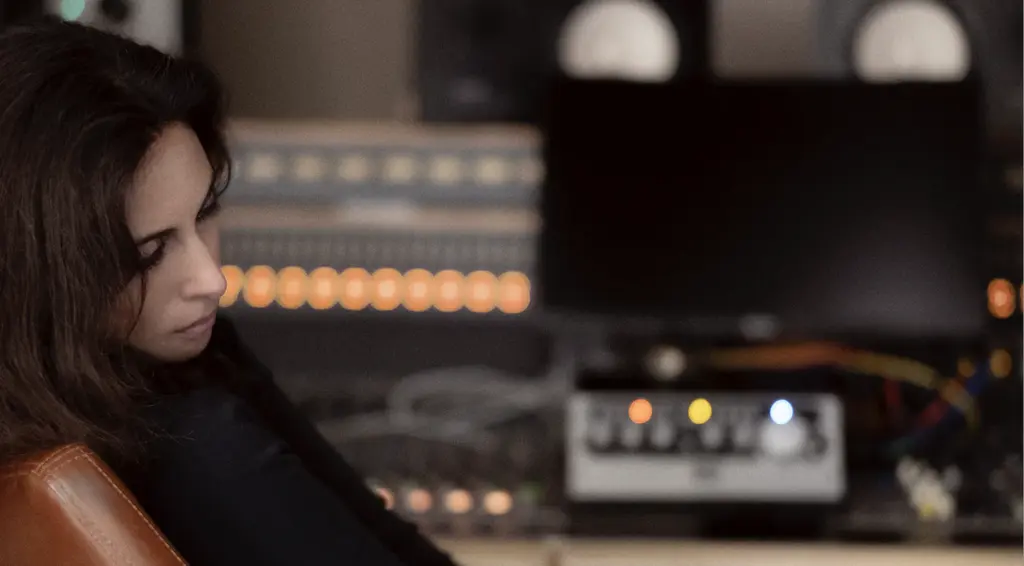
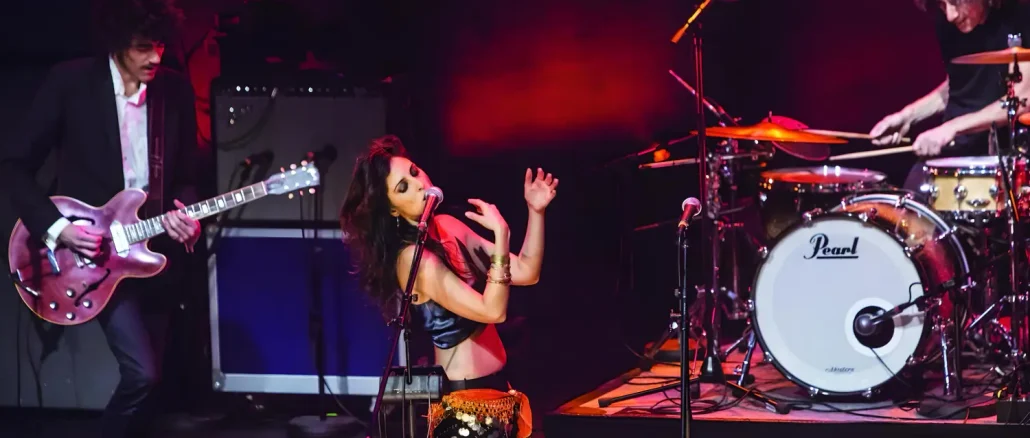
Yasmeen Hamdan (above and top) figured at globalFest in early 2014, the beginning of the year Bragin relocated to Abu Dhabi, when she was first emerging internationally as a solo artist after her time with Soapkills, the influential Lebanese indie electronic pop band that she formed with Zeid Hamdan (no relation). Bragin and Reem Allam, Associate Director, Artistic Planning at The Arts Center, had long wanted to book her; “we knew that she had history here – she grew up in part in Abu Dhabi – and though we knew she had performed in Dubai, we were keen to have her Abu Dhabi debut”. Hamdan had taken some time away from touring, but last autumn she released her first new album in eight years. “So we went and programmed her.”
(Subsequently the Alserkal Avenue people also signed her for the Quoz Arts Festival last weekend – but for the record, The Arts Center had booked her first.)
The extended break seems to have been good her; her apparently effortless merging of elements from a variety of sources from pan-Arabic pop and poetry to clubby electronica via soul and West Coast guitar is seen to good effect on that on that rather good album she released last September.
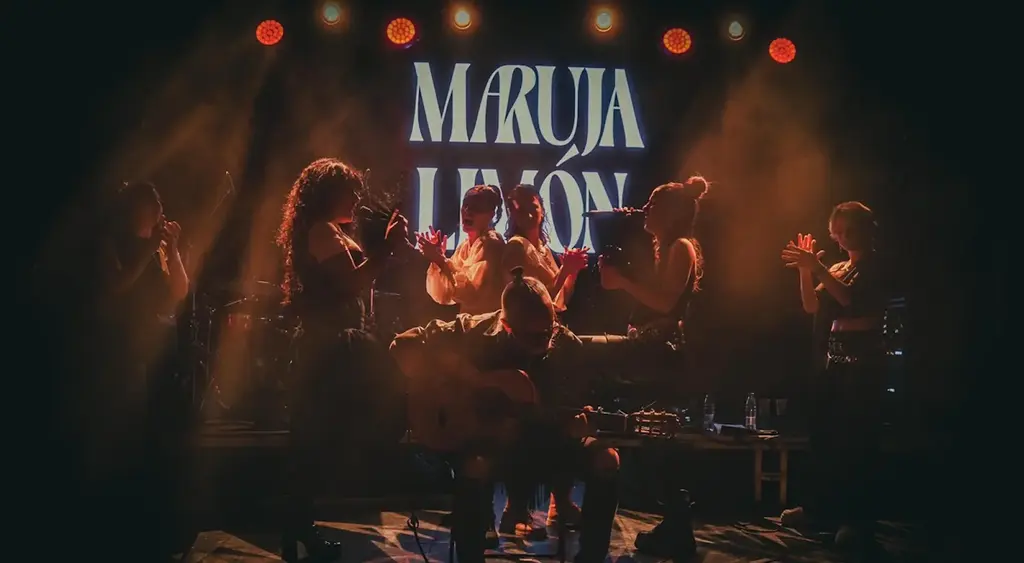
Another of the Tamaas bookings, Maruja Limón, had also performed at globalFest. “It was founded as a discovery festival and at that time they applied in response to an open call – I certainly wasn’t familiar with them. They performed just over a year ago at NYC’s Lincoln Center for globalFest’s 22nd edition, and I was blown away by the show. I knew immediately that I wanted to bring them here, and I think they’ll be a real crowd-pleaser. Flamenco aways does well, and I think their style of rumba with elements of pop and hip hop will really resonate.”
The band is an all-female six-piece from Barcelona, and they play what’s called Rumba Catalana. Te como la cara is the latest album, released a year ago; it’s fast, super-rhythmic, good fun and very danceable. (Incidentally the album title translates literally as ‘I eat your face’ which my Catalan friend tells me is slang for ‘I really, really like you’.)
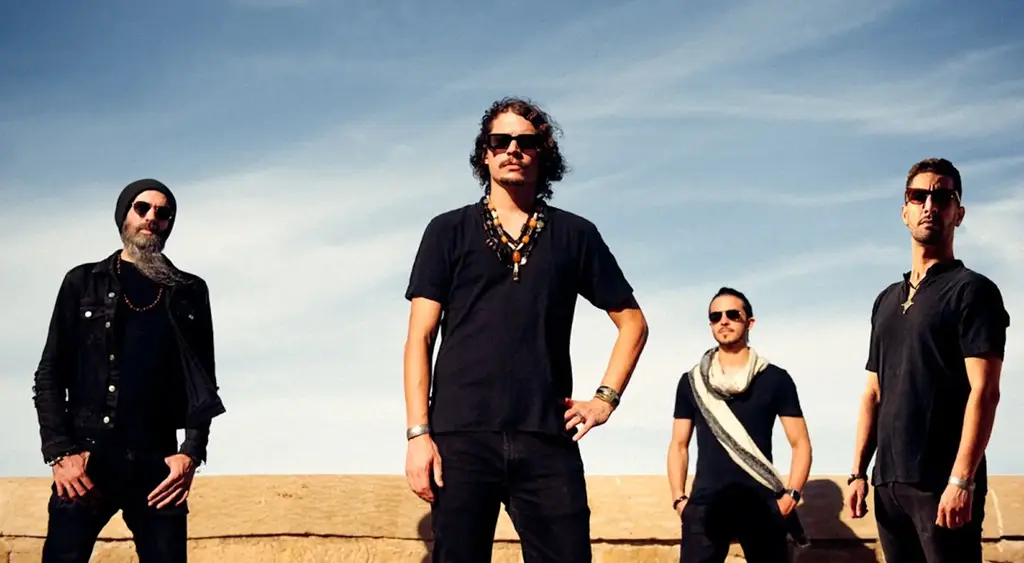
The third act, Al-Qasar, is one that Bragin has been tracking for a number of years. You probably couldn’t find a band CV that’s a better fit for the Tamaas vision: Al-Qasar’s members come from France, Morocco, Algeria, Egypt, and the United States. The band’s leader Thomas Attar Bellier has lived in Los Angeles, Paris, New York, Lisbon, and said he wanted “a project that was in tune with the daily life of people living in these international cities, something diverse, radically colourful, with a fresh, contemporary outlook on what societies really look like today”.
Al-Qasar now has an international core of Lisbon-based Moroccan singer Overzak, Iraqi-French drummer Adrien Al-Aiedy and French bassist Guillaume Theoden, delivering a brand of ‘Arabian fuzz’ – a propulsive mix of American heavy rock, North African trance, and Middle Eastern grooves. There’s a revolving cast of guest musicians on their records, all bringing something of their own cultures as well as their skills.
2024’s album Uncovered, Al-Qasar’s second full-length pressing, is full of good things and loads of variety, three original songs and covers you probably wouldn’t recognise as such – like the opener, Depeche Mode’s Personal Jesus, with the iconic riffs delivered on electric saz (the long-necked Turkish lute) and lyrics in Turkish from Sibel.
Says Bragin: “their manager sent me a copy of their first album, and I became a little bit addicted to it. When their second record came out, I shared it with Reem [Allam] and she fell in love too …
“Through their guests on their record, Al-Qasar connects with a lot of different artists in our orbit. Alsarah of The Nubatones, who’s been at The Arts Center in the past, is on one of their records. Jello Biafra from the Dead Kennedys and Thurston Moore from Sonic Youth are there, connecting to my American post-punk roots. Sami Galbi, a great up-and-coming Moroccan-Swiss electronic shabbi singer, is on their new record. Thomas Sattar is someone who’s just very well connected in a lot of different music worlds …”
It’s a bill that illustrates how The Arts Center sees the festival format as a way to include both well-known artists like Yasmin Hamdan and artists who are coming to the UAE for the first time. The combination is also important: “It is a global music festival. We have to look to the variety at its core. We’ve tried to ensure that it has strong connections in the region and then outside of the region. And as a transnational band, Al-Qasar sort of epitomises this.”
The Tamaas Festival is 29 January at 7pm, outdoors on the East Plaza – so there should be plenty of room to move your hips. Tickets are still available here, and at The Arts Center’s usual AED 105 must be something of a bargain.
Be the first to comment