

As we celebrate our first decade at The NYU Abu Dhabi Arts Center I’m proud that our journey has helped to spark a transformation of the way performing arts are experienced in the UAE. Here are five ways that we have tried to accomplish that.
Our tagline ‘Come Curious, Leave Inspired’ emphasises trust in our audiences. Even if unfamiliar with an artist or art form, we believed an open mind could lead to excitement and, just maybe, transformation.
For example, in our early years, we were uncertain about attracting audiences to contemporary dance shows, as this art form was not commonly presented in the UAE.
I think back to our first season, in 2016, when we presented Aakash Odedra’s solo contemporary kathak piece about dyslexia (the first of many in a multi-year partnership): or 2017 when we staged site-specific early works of Trisha Brown, a choreographer who was crucial to the beginnings of postmodern dance. That was a big and uncertain step in terms of how the audience would react. And then in 2019 we presented the work of Merce Cunningham, which can continue to challenge audiences even 50 years after it was first shown; I worried that people might not make it past the intermission … but the most experimental piece on the program was what they liked the most!

This taught us that people here are a lot more receptive than we sometimes imagine. And we also discovered that the UAE’s dance culture is more evolved than we realised, prompting us to map the dance scene so we can contribute to its development.
Our mission is to stage shows that others might not consider. For instance, Lars Jan’s Holoscenes featured an 11-foot-tall aquarium filled with water, where performers executed tasks as the water levels rose. Was this a living aquatic sculpture? Theatre? Dance?
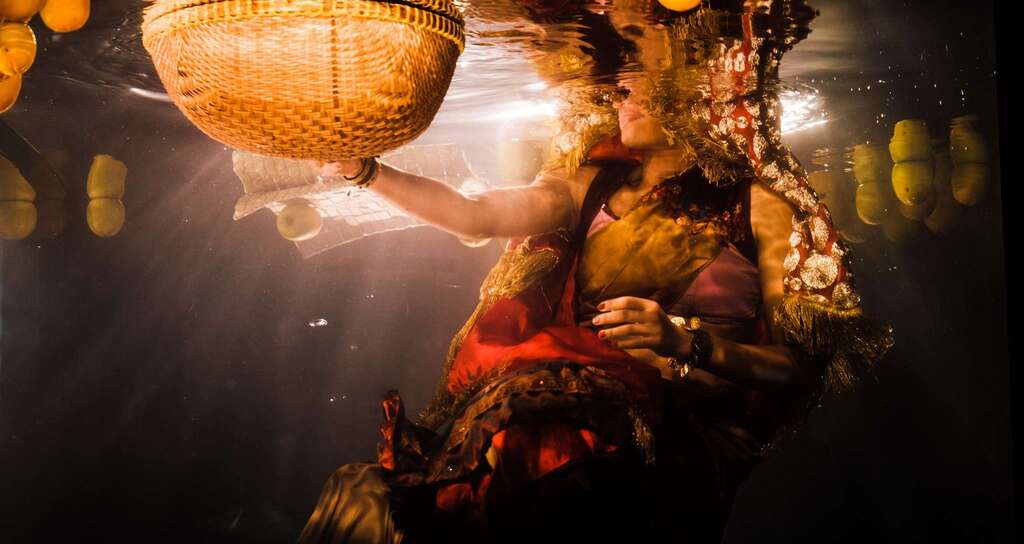
The answer is “all of the above”, but best of all is that the witnesses asking questions about climate change and about artistic form included young families who came to watch the underwater performances instead of television before bedtime. This for me is the definition of a thriving cultural scene: challenging and thought-provoking, but also inclusive and playful.
During the pandemic, when we couldn’t gather in person, we reimagined out digital spaces via theatrical telephone calls and 3D-audio headphone pieces. That sense of experimentation continues with a VR-based piece we’ve co-commissioned for a future season; it starts with an Afghani mother who is trying to keep a school for girls open in Afghanistan, and then moves back in deep time to the point where homo sapiens and neanderthals coexisted. It conjures thoughts about the constant conflict that is a feature of mankind but also how similar we all are.
We believe in providing access to diverse art forms by removing unnecessary barriers like jargon, ticket prices, and formality. I want people to think of attending a performance not as a special event where you have to wear a tuxedo or a gown – but you can just as easily show up in your work clothes with your buddies.
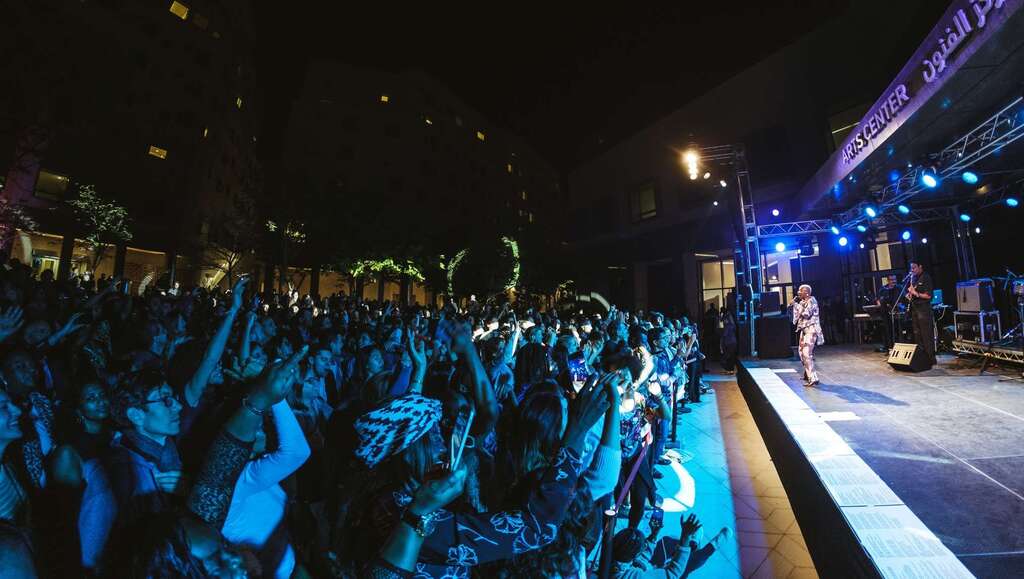
Ultimately, I want the act of going to performances to be part of the habit of people’s lives. That’s a big reason why we’re bringing back our membership plan, to encourage people to experience our offerings on a regular and ongoing basis, even if it’s outside their usual comfort zone.
Access to a wide range of arts is crucial for young people to discover their passion early. Through artist residency programs, workshops, and collaborations, we’ve provided a platform for Emirati and UAE-based artists to develop their craft and gain international exposure.
Our Numoo programme helps artists grow professionally and build a sustainable artistic community. This has been particularly important in a city where the arts scene is still relatively young and where opportunities for emerging artists can be limited.
The development of artists for viable careers reminds me of lessons from Michael Kaiser, former president of the John F Kennedy Center for the Performing Arts. He developed an approach called ‘The Cycle’ to think about how cultural organisations can be sustainable. The Cycle always begins with great art, which is why you exist. But then you use marketing to share key points throughout the year where you celebrate the organisation.
This helps to grow your ‘family’ of stakeholders: fans, donors, sponsors, press, and, of course, artists. This leads to revenue, which is not the end goal but is critical to reinvesting back into great art.
And that allows the cycle to continue – which is why The Arts Center invests in young people: as artists, as audience members, and as arts administrators, as a key part of our family.
Culture doesn’t emerge from a vacuum. After 10 years, I see The Arts Center’s intergenerational impact on the arts scene here. Supporters who first visited on school trips have graduated and are now making art worldwide. A number of our alums are working at leading arts organisations around the UAE.

By providing platforms for local artists, like NYUAD alumnus Reem Almenhali, we ensure programming reflects our community’s diverse cultural identities. Hamour Doesn’t Leave the Cubicle, a play about the absurdities of workplace bureaucracy written by Ahmed Almadloum and directed by Almenhali, was a highlight of our fall schedule. Our upcoming edition of Hekayah, celebrating the UAE’s National Day, features a line-up of established and up-and-coming locally based artists, each drawing from their own backgrounds, and connecting it to the place they call home.
So it’s not just about how we affect Abu Dhabi’s cultural development, but also how we affect the people who affect the culture!
Be the first to comment